When we were deciding where to take my sister Elaine, who was coming to Japan for the first time, one place was essentially a no-brainer. Most folks that are familiar with Japan recommend that any first-time visitor should go to Kyoto above any other place.
Kyoto is practically a must-see place to visit if you come to Japan. It has all the history you would expect, with ancient temples, shrines, and castles. But most of Kyoto is modern, or let’s say post-war, so very similar to other Japanese cities in that regard. I will recommend a few temples or shrines to see that I consider the best, but there are so many others that you will be overwhelmed quickly trying to decide which ones to visit.
Here are some of the places we visited.
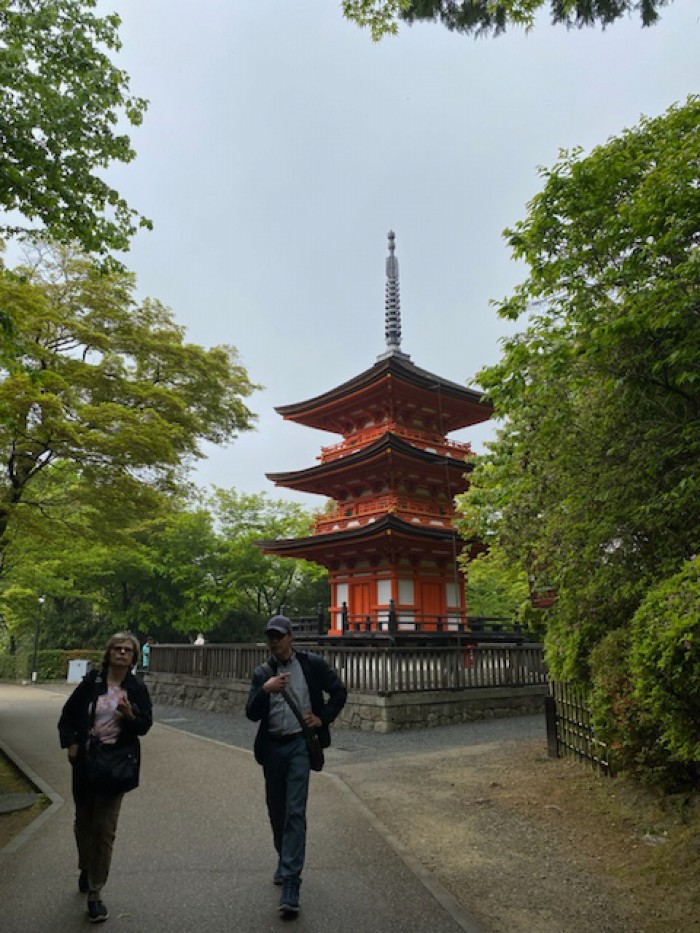
Kiyomizu-dera — A stunning temple complex set on a hillside, surrounded by a forest.
We arrived by bus at Kiyomizumichi, and walked from there to the temple. There are many tourist shops and restaurants on the route to the temple. When you come upon Niomon Gate, you know you have arrived at the main entrance. You will need to buy a ticket to enter - cash. Climb the steps at the gates and follow the crowds. The views from the temple "stage", or main hall, are truly amazing, especially in the spring and fall. Wander around, as there are quite a few temples here, as well as the Sanjunoto, or three storied pagoda. After the main hall look for the path down towards Otonowa-no-taki, a little waterfall with three streams of water. Drink from one using the ladle. Each stream provides a particular kind of good fortune - love, longevity, or success.


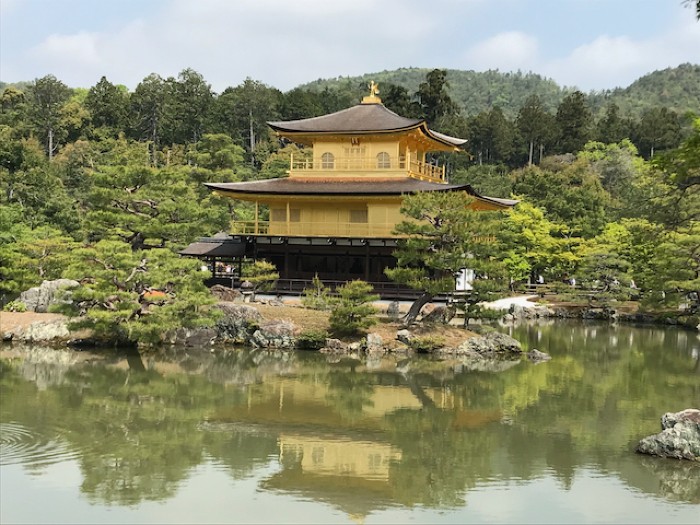
Kinkaku-ji - Temple of the Golden Pavilion
In my opinion the prettiest temple of them all. The setting is beautiful with the golden temple on a pond with surrounding gardens. The temple is located in the northwestern part of Kyoto. We came by bus from our hotel near Gion. Kinkaku-ji was designated as a UNESCO World Heritage Site in 1994. Visiting on a good weather day is best because in the full sun your pictures of the golden temple will be spectacular.

Fushimi Inari Taisha - Tunnel of Color
I visited this Shinto shrine decades ago but could not visit it on our last trip unfortunately. So, no pictures. (I learned the hard way not to publish pictures taken by other people.) Sad. Anyway, it is a rather unique complex as it includes the famous tunnel of red torii gates - Sembon Torii - and the surrounding forest and Mount Inari. It is solidly on my top three list of temples and shrines to visit.


Nijo-jo — Stoic and underrated ancient castle and grounds.
Nijo Castle was a place on my list to visit when we visited Kyoto earlier this year, and fortunately we had the time to go there. The grounds are rather large, with nice gardens surrounding the main building. They offer a very informative self-tour; you can buy tickets there. Lots of colorful rooms and history explanations in English are available.


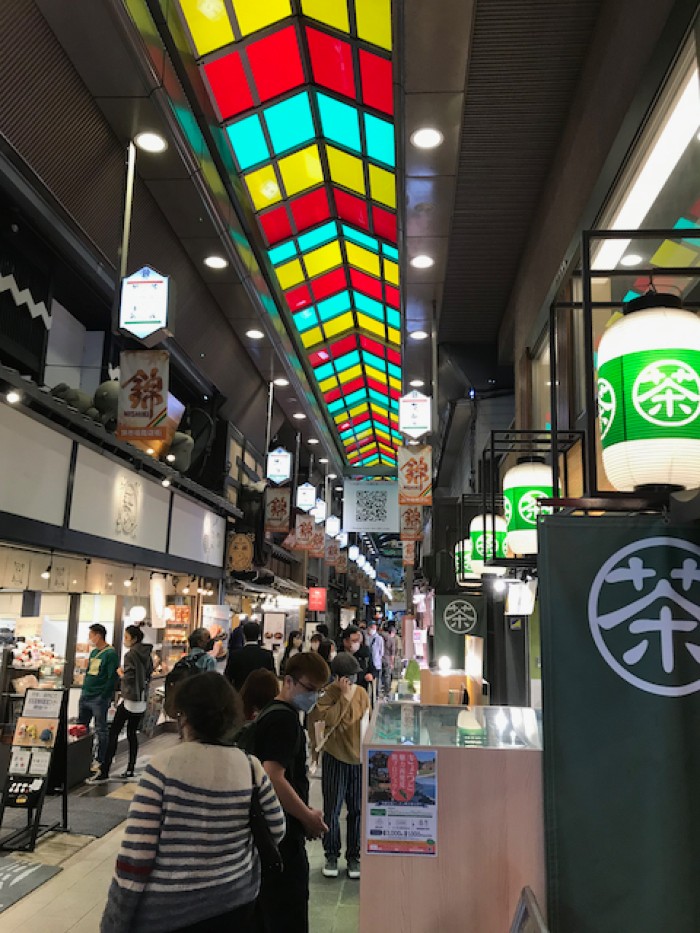
Nishiki Market — Soup to nuts, pots to pans, it has everything.
Now for something completely different. This market is basically a long narrow covered mall filled with little shops. Many of the shops sell food, so you can snack along the way. Great to do on a rainy day. Not a bad place to grab some lunch as you walk. There are connecting areas with more shopping so fun to explore them. Extra points if you can find Mipig Cafe.

Pontocho —Awesome area for a traditional Japanese Kaiseki dinner.
A good place to check out at night, Pontocho is basically an alley that runs parallel to the river. It is known for its restaurants featuring exclusively Japanese cuisine, though I think I did see one or two other restaurants that snuck in there. Some restaurants have an outdoor deck from which you can see the river. Look into which restaurant you want to visit, and then select a Plan B in case your first choice is full.

Gion Walk — Traditional shops and restaurants in Edo period architecture.
This is the old area of town, with a mix of shops and restaurants. Start at Gion-Shijo station. On the other side of the river is a more modern shopping area. But you want to walk the other direction towards Yasaka Shrine. Look for Hanamikoji Street - turn right. Old style buildings line the street; go as far as Gion Corner. There are two theaters there where you can catch a live Geisha show. They sell tickets out front, but better to check online before you go.
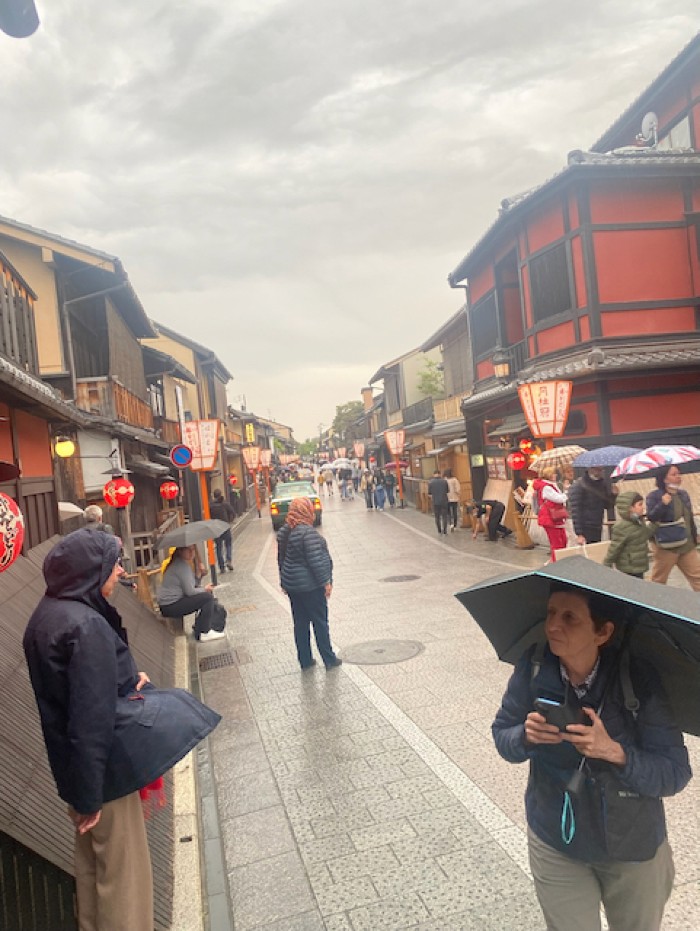
There are plenty of temples in the backstreets of this area, and a new large hotel is being built there too. I like this better than Philosopher's Walk, though you might want to check that out too.
Location
Vocabulary
Flash Card Drill-
That castle is underrated and worth a visit.あの城は過小評価されていますが、訪れる価値があります。
-
The restaurant is underrated compared with the famous places nearby.そのレストランは、近くの有名な店と比べると過小評価されています。
-
We bought snacks at the market.私たちは市場でおやつを買いました。
-
The market was busy even on a rainy day.雨の日でも市場は混んでいました。
-
The two plans are essentially the same.その2つの計画は本質的に同じです。
-
She is essentially a kind person.彼女は本質的には親切な人です。
-
Choosing the cheaper flight was a no-brainer.より安い便を選ぶのは考えるまでもありませんでした。
-
For me, this job offer is a no-brainer.私にとって、この仕事の申し出は迷うまでもないものでした。
-
The room was practically empty.その部屋は事実上空っぽでした。
-
We practically finished the project last night.私たちは昨夜、そのプロジェクトをほとんど終えました。
-
I felt overwhelmed by all the new responsibilities.私は新しい責任の多さに圧倒されました。
-
She was overwhelmed with joy when she heard the news.彼女はその知らせを聞いて喜びで圧倒されました。
-
They sat in the pavilion to drink tea and watch the sunset.彼らは亭に座ってお茶を飲み、夕日を眺めました。
-
The garden pavilion is illuminated at night.庭の亭は夜になるとライトアップされます。
-
Healthy habits can improve longevity.健康的な習慣は長寿を促進することがあります。
-
The longevity of the bridge surprised the engineers.その橋の耐久性の長さに技術者たちは驚きました。
-
We watched a spectacular sunset over the ocean.私たちは海に沈む壮観な夕日を見ました。
-
The fireworks show was absolutely spectacular.花火大会は本当に見事でした。
-
Basically, we need more time to finish the work.基本的に、仕事を終えるにはもっと時間が必要です。
-
He's basically saying that he agrees with us.彼は要するに、私たちに同意していると言っています。
Quizzes
What did you think of this lesson?
Ask a question or share a thought — I read every one.