
As I mentioned in the previous lesson describing our bus tour, one of the four main stops was at the To-ji temple in southwestern Kyoto. It was mid-afternoon, and not too crowded yet, so we got around easily and took some great pictures. Sakura was blooming nicely on the numerous cherry trees on the property.
In the year 794, Heian-kyō, now known as Kyoto, became the capital of Japan. The reason the capitol was moved to Kyoto was because in Nara, the previous capitol, powerful temples in the region were exhibiting disturbing influence on the political functioning of the government. So, with that in mind, it took some time for the government to allow any temples to be built in Kyoto. But a couple of years after the capital moved, the government acquiesced, and allowed three Buddhist temples to be built: Tō-ji on the eastern side of the Rashōmon Gate, Sai-ji on the western side of the gate, and Shingon-in located within the imperial palace grounds. Rashōmon Gate led straight through Kyoto towards the Heian Palace. Only To-ji still exists.
Emperor Saga appointed the monk Kobo Daishi, founder of the esoteric Shingon school of Buddhism, as Chief Abbot of Tō-ji in 823. Hence, the artifacts inside the individual temple buildings are of important figures of Shingon Buddhism.
Even with a time limit imposed by the bus tour, we were able to see the major buildings within this sprawling temple complex. The most eye catching by far is the five storied pagoda, gojū no tō. You can see it from outside the gates of the temple, so we had to head there straight away.
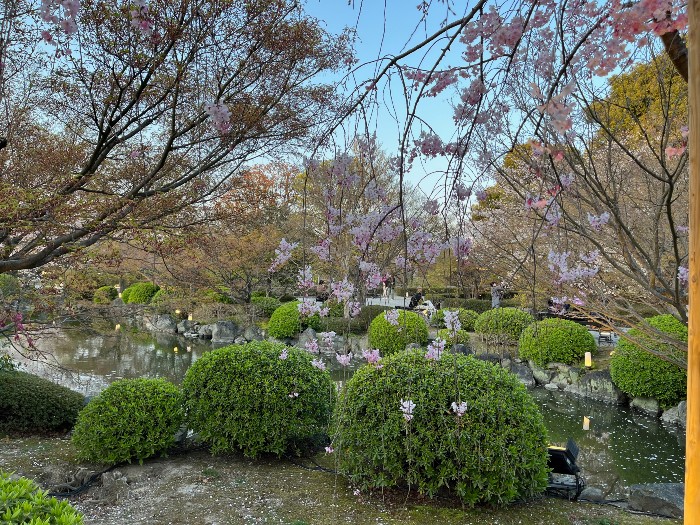
As you come into the interior of the temple grounds, you will notice Tōji Hyōtan-ike, a fairly large pond that extends all the way down towards the pagoda. It is lined with numerous cherry trees, which were in full bloom. Gorgeous!
We were not able to enter the pagoda, though I understand that you can enter on certain days in the spring. Apparently we were not here on one of those days. No matter, it is a magnificent structure, and worth the seemingly billions of pictures I took of it.
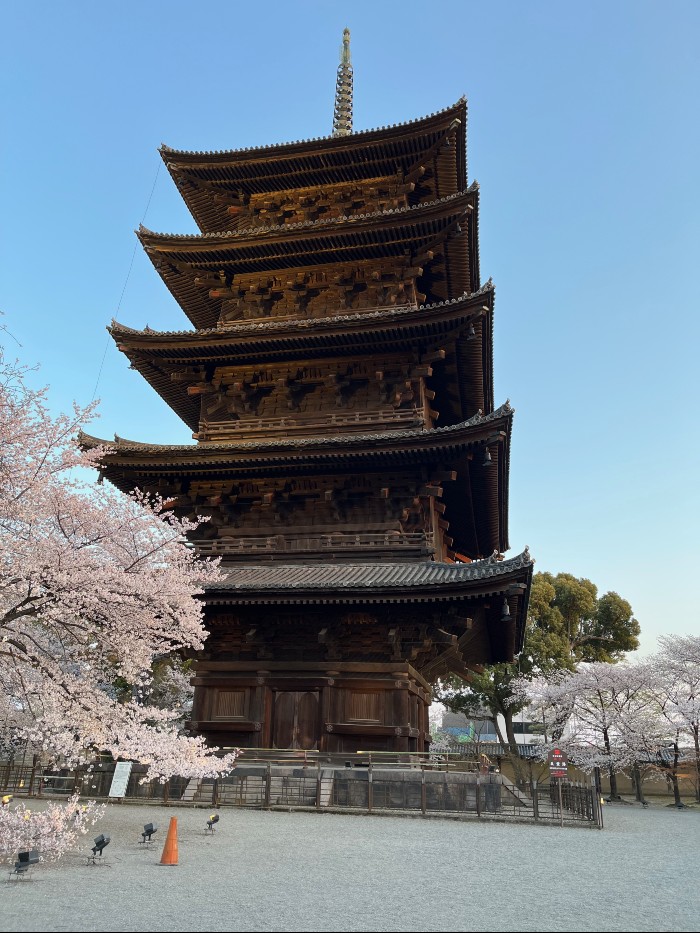
The history of this pagoda is rather sad really. Built in the 9th century, the pagoda burned down numerous times over the centuries mainly due to lightning strikes, and was rebuilt every time. The last time it was rebuilt was during the Edo Period in 1644, and has been able to avoid yet another catastrophe since.
Next we strolled over to the enormous building known as Kondo Hall. The original hall was built in the 8th century but burned down in 1486 and was reconstructed in 1603. There are around 10 steps to get up to the level to enter the building. Inside is a famous wooden statue of Yakushi Nyorai, Nikko and Gakko Bodhisattvas at each side. Yakushi Nyorai is the Buddha of Medicine. Bodhisattvas are enlightened beings who have put off entering paradise in order to help others attain enlightenment.
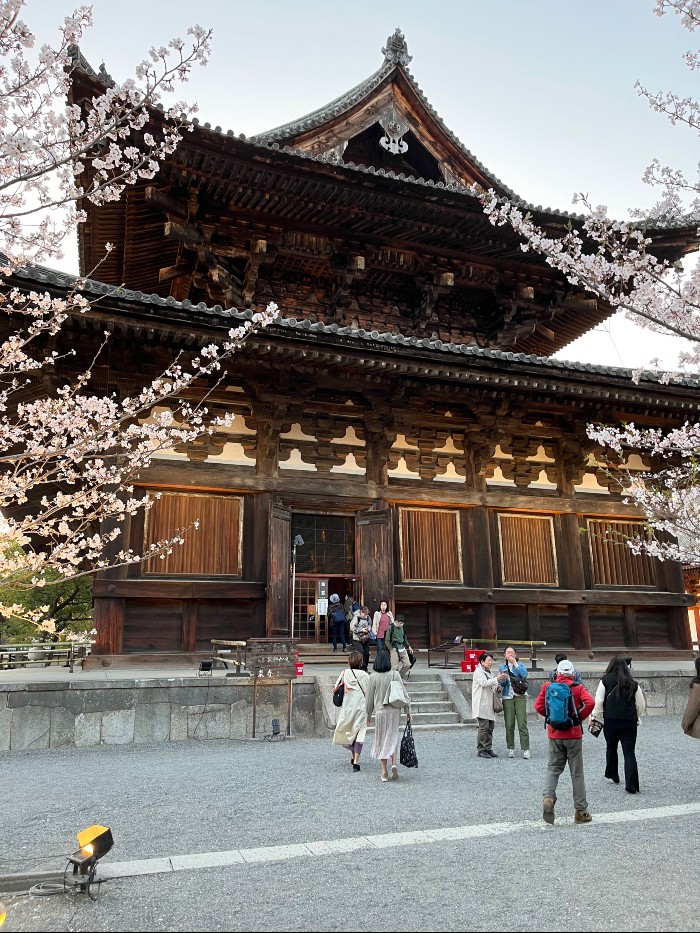
Right next door is Kodo Hall, which was constructed in 825 by Kobo Daishi, a Japanese Buddhist monk who founded the esoteric Shingon sect of Buddhism. It too burned down with Kondo Hall in 1486, and rebuilt in 1491. Statues imported by Kobo Daishi from China are on display, with Dainichi Buddha at the center, surrounded by other Buddhas and bodhisattvas. Dainichi is the creator of the universe and the king of all buddhas.Neither of these buildings allows pictures to be taken, so you'll have to see them for yourself! Afterward, we headed over to the Jikido, where you can buy tea and mochi snacks. We did just that, and sat down in the open air pavilion to watch the sun go down, and the lights go on. To-ji is like a different world with the trees and buildings illuminated.
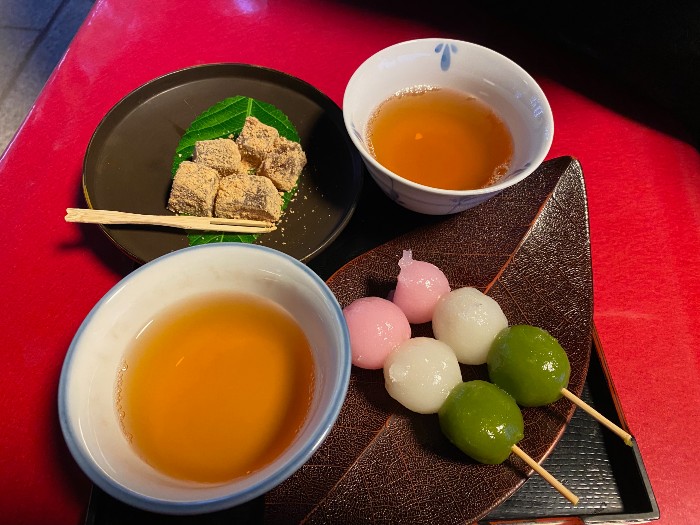
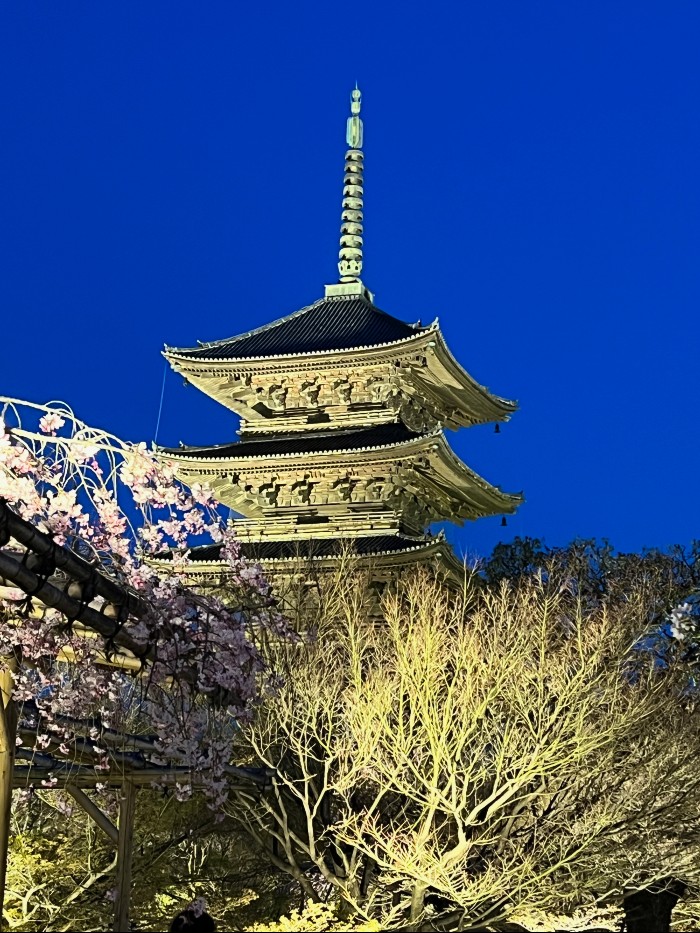
After our tea and snacks it was time to meet back at the bus, and so off we went. We felt we were extremely lucky to see this temple in good weather at cherry blossom time. I hope you are able to do the same someday!
Location
Vocabulary
Flash Card Drill-
The state capitol is open to visitors during the day.州議会議事堂は昼間に見学者に公開されています。
-
We took many photos of the capitol from the park across the street.私たちは通りの向かいの公園から州議会議事堂の写真をたくさん撮りました。
-
The city finally acquiesced to the residents' demands.市はついに住民の要求を黙認しました。
-
Rather than argue, she chose to acquiesce in his decision.彼女は議論するよりも、彼の決定を黙認することを選びました。
-
The museum displayed ancient artifacts from Egypt.博物館はエジプトの古代人工物を展示しました。
-
Archaeologists discovered artifacts that date back thousands of years.考古学者たちは数千年前の人工物を発見しました。
-
They walked through the sprawling temple complex.彼らは広大な寺院の敷地を歩き回りました。
-
The city is a sprawling mix of old and new buildings.その都市は古い建物と新しい建物が広大に混ざり合っています。
-
The fire was a catastrophe for the historic temple.その火事は歴史ある寺にとって大災害でした。
-
They worked together to prevent another catastrophe.彼らは別の大災害を防ぐために協力しました。
-
A statue of a bodhisattva stood beside the main Buddha image.本尊の仏像の横に菩薩の像が立っていました。
-
The bodhisattva is believed to guide people toward enlightenment.菩薩は人々を悟りへ導く存在だと信じられています。
-
Bodhisattvas are enlightened beings who help others.菩薩は他者を助ける悟りを開いた存在です。
-
He was described as an enlightened teacher.彼は悟りを開いた教師として語られました。
-
They sat in the pavilion to drink tea and watch the sunset.彼らは亭に座ってお茶を飲み、夕日を眺めました。
-
The garden pavilion is illuminated at night.庭の亭は夜になるとライトアップされます。
-
At night, lights illuminate the trees and buildings.夜になると、明りが木々や建物を照らします。
-
Lanterns illuminate the path around the pond.提灯が池の周りの小道を照らしています。
-
The palace was a beautiful example of Gothic architecture - truly magnificent.宮殿はゴシック建築の美しい例でした-本当に壮大です。