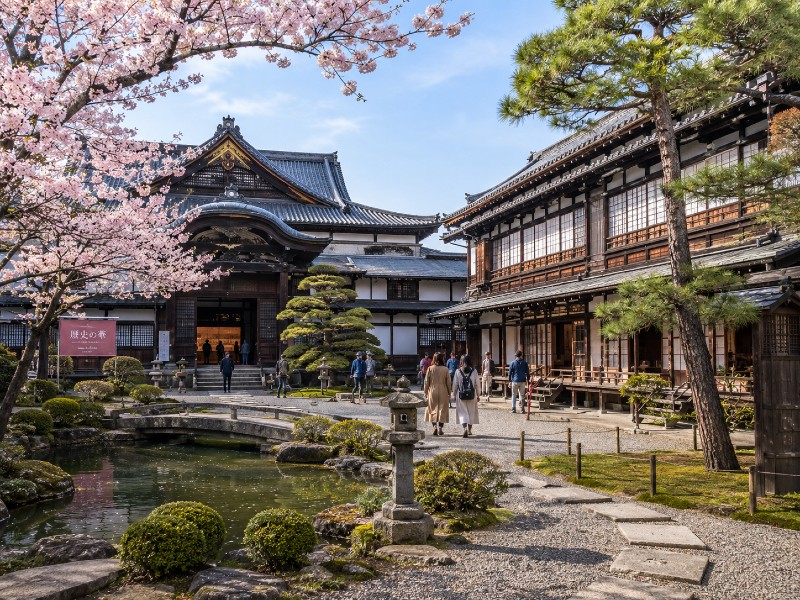
Japan Series: Museums and Estates
This series focuses on certain museums that I found interesting. Some are buildings that were designed as museums, while others are old estates where historic figures used to live - kind of like a living museum.
Lessons in this Series
9
The Former Residence of Marquis Maeda
Recently I came upon two beautifully restored residences that were built by Marquis Maeda and Prince Asaka, two Japanese aristocrats in first half of the 20th century. This lesson is about the former residence of the Marquis Maeda Toshinori and his family. His main residence, a western-style building known as the Yokan, is connected by an open pathway to a Japanese style home known as the Wakan. They are located in Komaba Park, Meguro Ward, Tokyo.

The Prince Asaka Residence and Gardens
The second residence I came across in Tokyo was built by Prince Yasuhiko Asaka, a member of the royal family with a troubled wartime past. The design of the home was heavily influenced by his wife Nobuko. The residence was built on property in Shirokane that was owned by the Imperial Family and bequethed to the young prince at the time of his marriage. The stunning Art Deco interior rooms were designed by Henri Rapin and Rene Lalique.

Kyu-Iwasaki-tei Gardens, Turn of the Century Estate for the President of Mitsubishi
If you have been following my explolits in Japan you will know that I have written about a couple of estates that were built upon western architectural principles. The estate built for Hisaya Iwasaki is another great example of Japan's interest in western architecture at the turn of the 19th century.

Akasaka Palace, the State Guest House
Ever wonder where dignitaries from other countries get entertained in Tokyo? I never thought about it until I came across pictures of Prime Minister Kishida welcoming the Philippine President Ferdinand Marcos Jr. at Akasaka Palace. I was pleasantly surprised that I could tour this magnificant estate.

The Ministry of Justice, Where We Found Justice After All
One sunny afternoon in December we strolled up to the Ministry of Justice building, or more commonly known as the Red Brick Building. Getting in to see the museum inside was a bit of a challange, but I have a tip for you so you don't run into a roadblock.

Ichirō Hatoyama's Residence, Hatoyama Hall, in Otowa
Hatoyama Hall is one of those important residences in Tokyo that many people overlook. Some Japanese folks may know of the Hatoyama family because of their legacy, but your typical tourist will have no idea who they were. Include me as someone who knew nothing about the Hatoyama's until I stumbled on their little palace in Google Maps.

The Edo Tokyo Open Air Architecture Museum
Located in the western suburbs of Tokyo, the Edo Tokyo Open Air Architecture Museum is a unique collection of buildings that were transported onto this 17 acre site. The buildings span quite a bit of Edo era history, and provide a glimpse into what it was like to live during that time.

The Chambers of Power: A Spring Stroll Through Tokyo’s Political Heart
Over the years I have seen many pictures of The National Diet Building in Nagatacho, but never actually came close to visiting it. Well, finally that day came, and it was grander than I expected. And we even got a chance to visit the Parliamentary Museum and the National Diet Library before our tour started!
Museums in Shizuoka That You Did Not Know Existed
I was looking at some old photos the other day and stumbled on a place off the beaten track that I had pretty much forgotten about. Our friends took us for a ride in their car to a unique park and museum complex called Clematis no Oka in Susono, Shizuoka Prefecture. You may want to go too after reading this, but unfortunately, one of its key museums is closed indefinitely! Sigh.