We took off from Haneda on a Tuesday morning in June bound for Kyushu, one of the four large islands that comprise Japan. Kyushu is southwest of Tokyo, and roughly 190 km away from the shores of South Korea.
When we make our biannual trip to Japan, we normally plan a trip inside Japan. Kyushu, more specifically Miyazaki, was our planned destination on this trip. Toyoko, my better half, had been there many years ago in her youth, so she wanted to revisit Miyazaki and rekindle some memories. I'd never been to this area of Kyushu, so I was on board without any arm twisting.
We landed at Kagoshima airport a couple of hours or so later, greeted by a steady rain. Oh well, sometimes the weather doesn't cooperate with our travel plans. Such is life. Nonetheless, there is something special about Japan in the rain. It seems natural somehow.
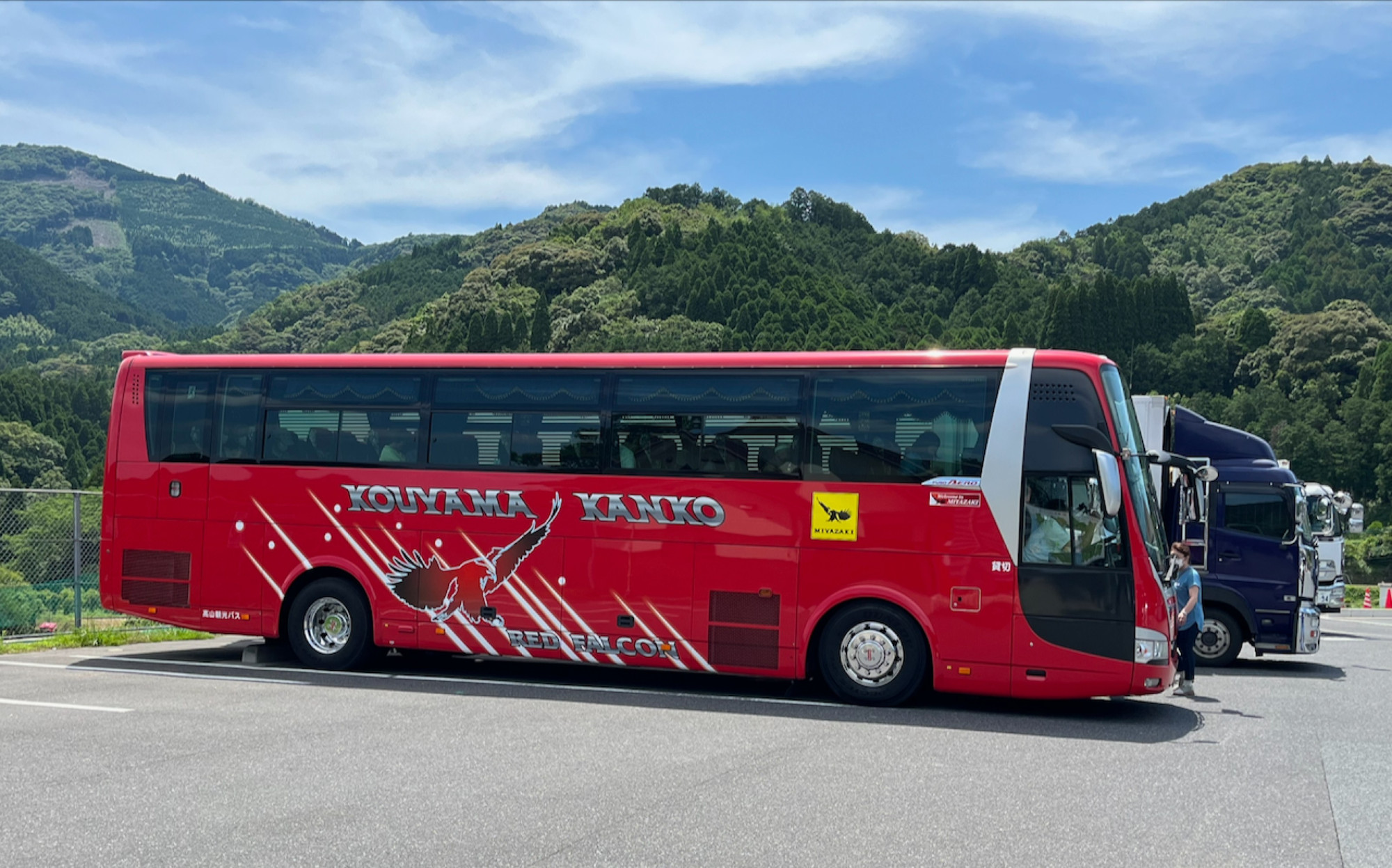
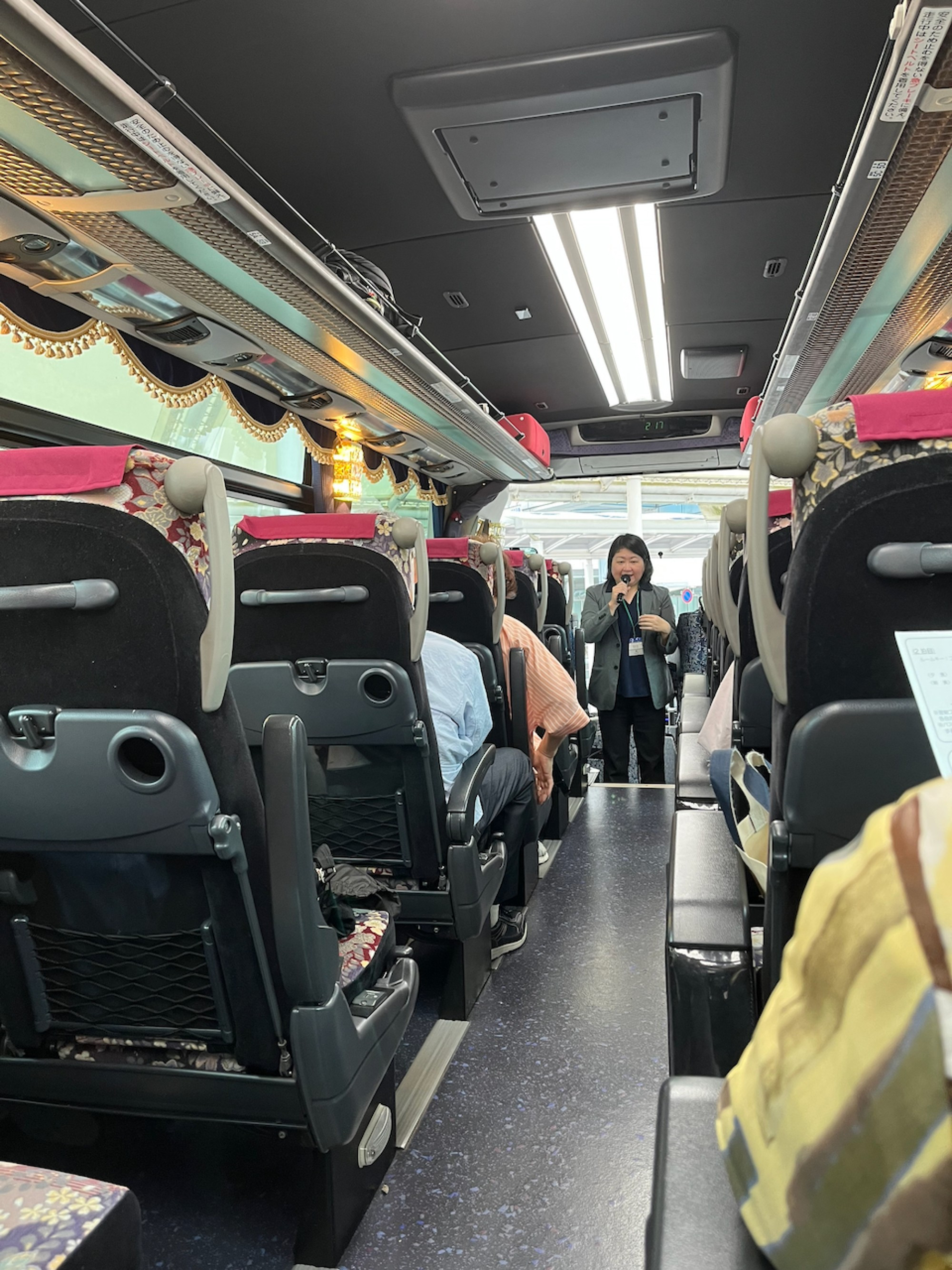
Our tour bus was waiting, along with our tour guide. I didn't catch her name, so let's call her Jane. Jane was a very knowledgeable person with a tone of speaking that I believe is known as captivator cadence, where the speaker uses high starter-tones to grab a crowd's attention, lowers their pitch to deliver the factual information, and hooks upward again to deliver another point and maintain it while at the same time keeping folks' attention. That high pitch of hers perked my ears up even if I could not catch what she was saying. As we boarded the bus and headed to our first destination, Jane regurgitated some interesting facts about each area we visited, only some of which I could discern with my feeble Japanese skills.
Obino Plateau
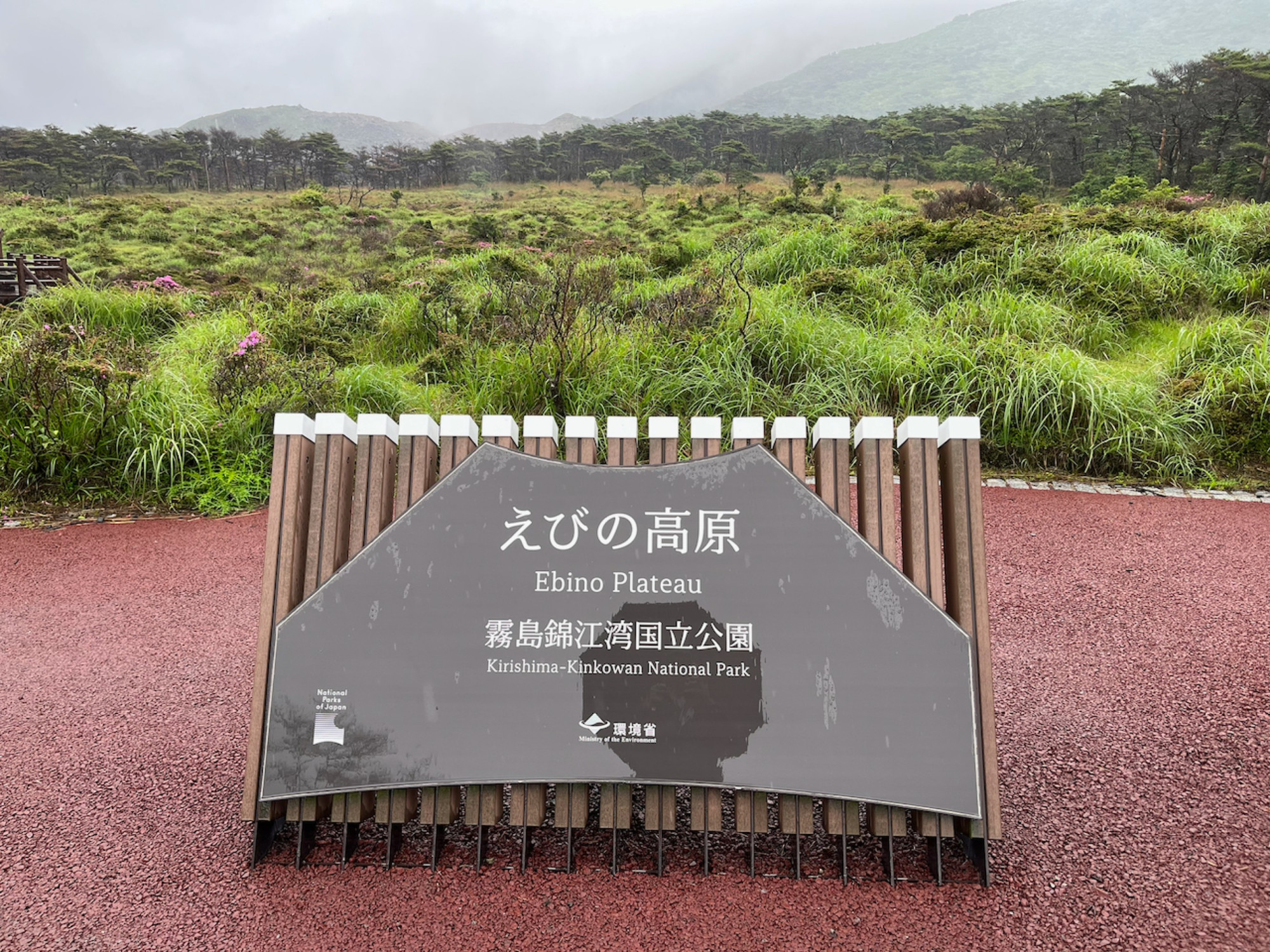
On this rainy day our first stop was the Obino Plateau, a 1,200-meter-high volcanic basin situated in Kirishima-Kinkowan National Park. Obino Plateau straddles the border between Miyazaki and Kagoshima prefectures. It is well known for its crystal-clear lakes, fumaroles that emit steam, and scenic hiking trails. You can see the Shinmoedake, an active volcano, jutting into the sky in the distance. Not active that day, fortunately!
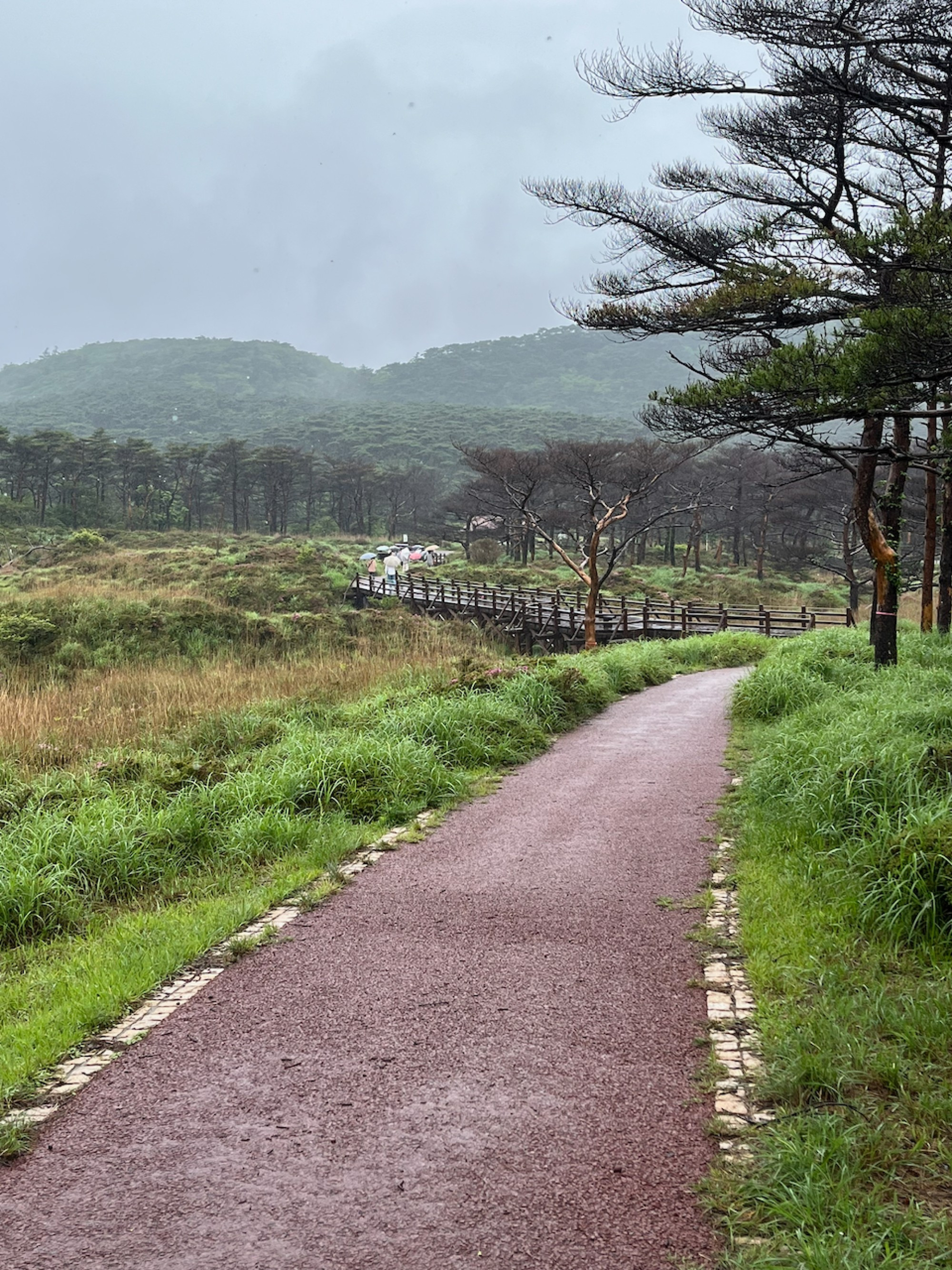
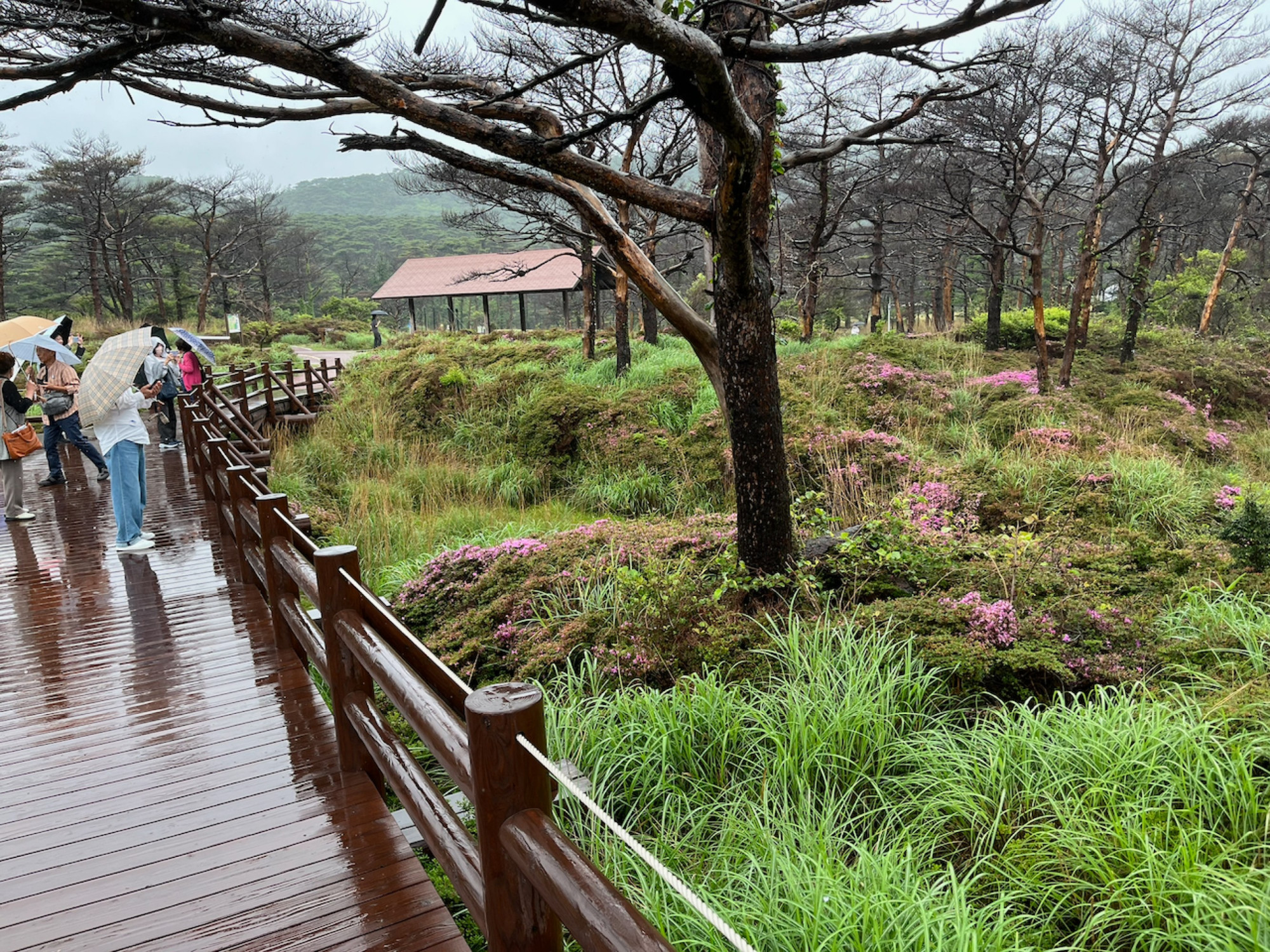
With umbrellas in hand, we proceeded to do a little mini-hike on a path that was pretty much parallel with Route 1. There we encountered fields of azalea and other bushes that went on endlessly into the distance. The pink of the azaleas contrasted nicely with the rainy fog that hovered over us. We did not go too far on this hike because of the rain, and we had a tour schedule to deal with too, so off we went back to the bus.
Miyazaki City 1st Night
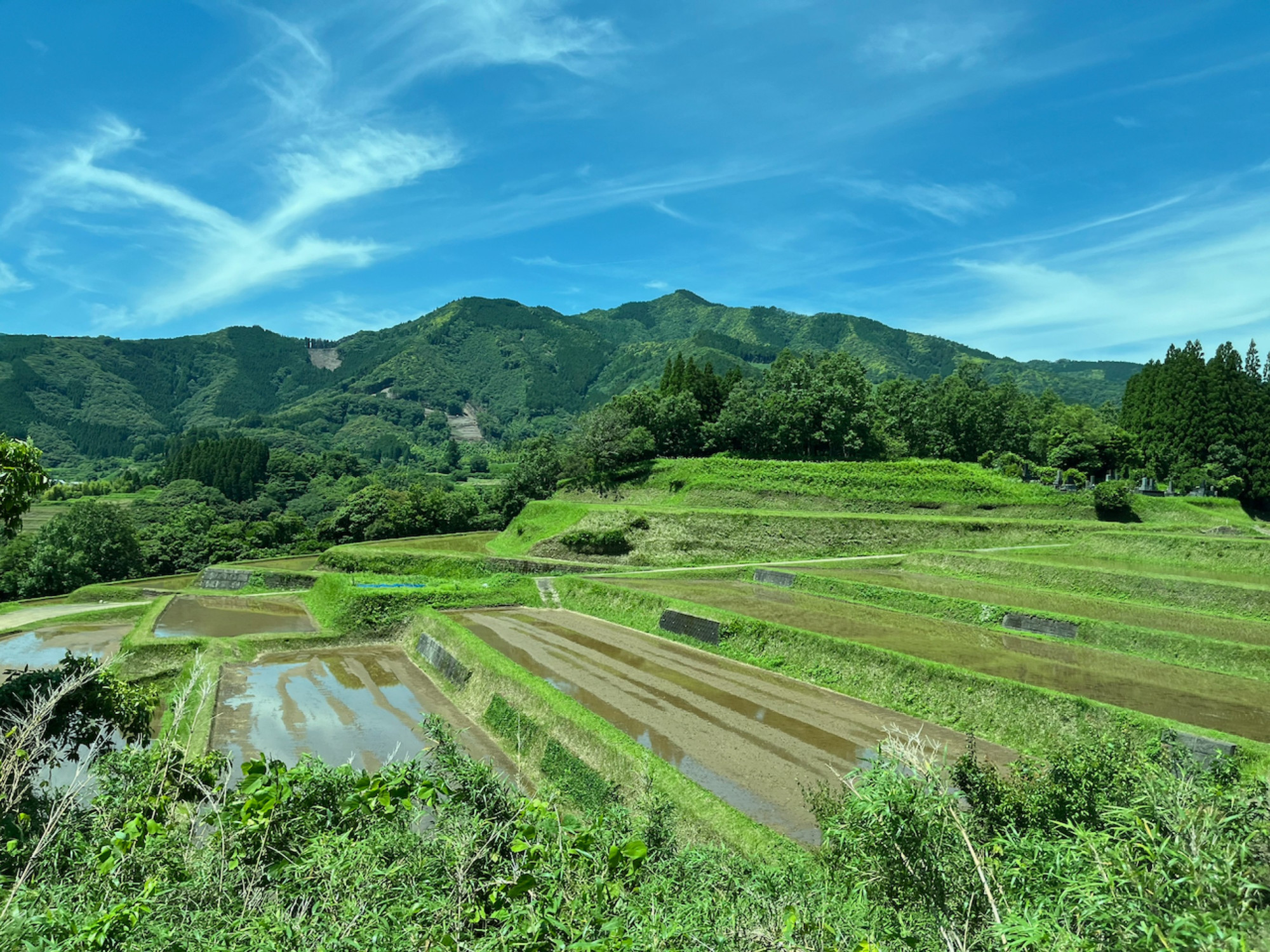
It was getting towards mid-afternoon so we were off to Miyazaki City, and to a dinner spot on the edge of the harbor. The ride from Obino took over an hour, but we had a lot of nice scenery to look at during the ride.
Our sushi dinner was uninspiring, but was a welcome rest stop. After dinner the bus took us to our hotel. It was getting dark already, and still raining, so we checked in and took the evening off to rest up for the big day tomorrow.
Takachiho Gorge
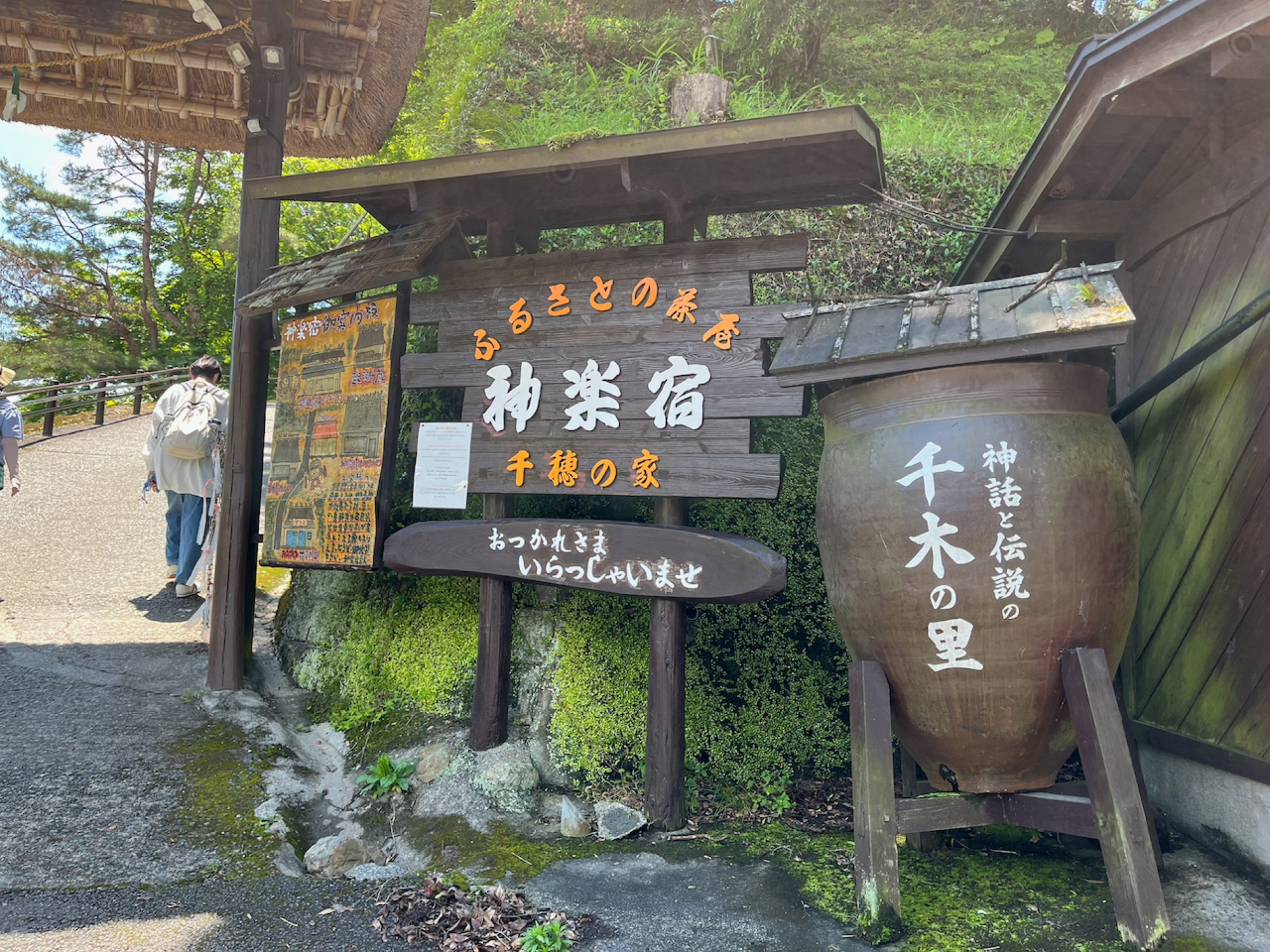
Our bus route the following morning was north on the main highway E10 until we reached Nobeoka, at which point we veered west towards Takachiho. It was quite a drive, but we got there for an early lunch at the Kagurayado, a complex of restaurant, gift shop, and dance show venue. The Yoidono Mansion restaurant is housed in a farmhouse over 260 years old. Traditional dance shows are held at the yodoyashiki thatched roof building next door.
This lunch was the best meal of the trip perhaps, with an assortment of dishes that was sure to include something that even the pickiest eater would like. With full tummies, we made our way towards the path leading to Takachiho Gorge.
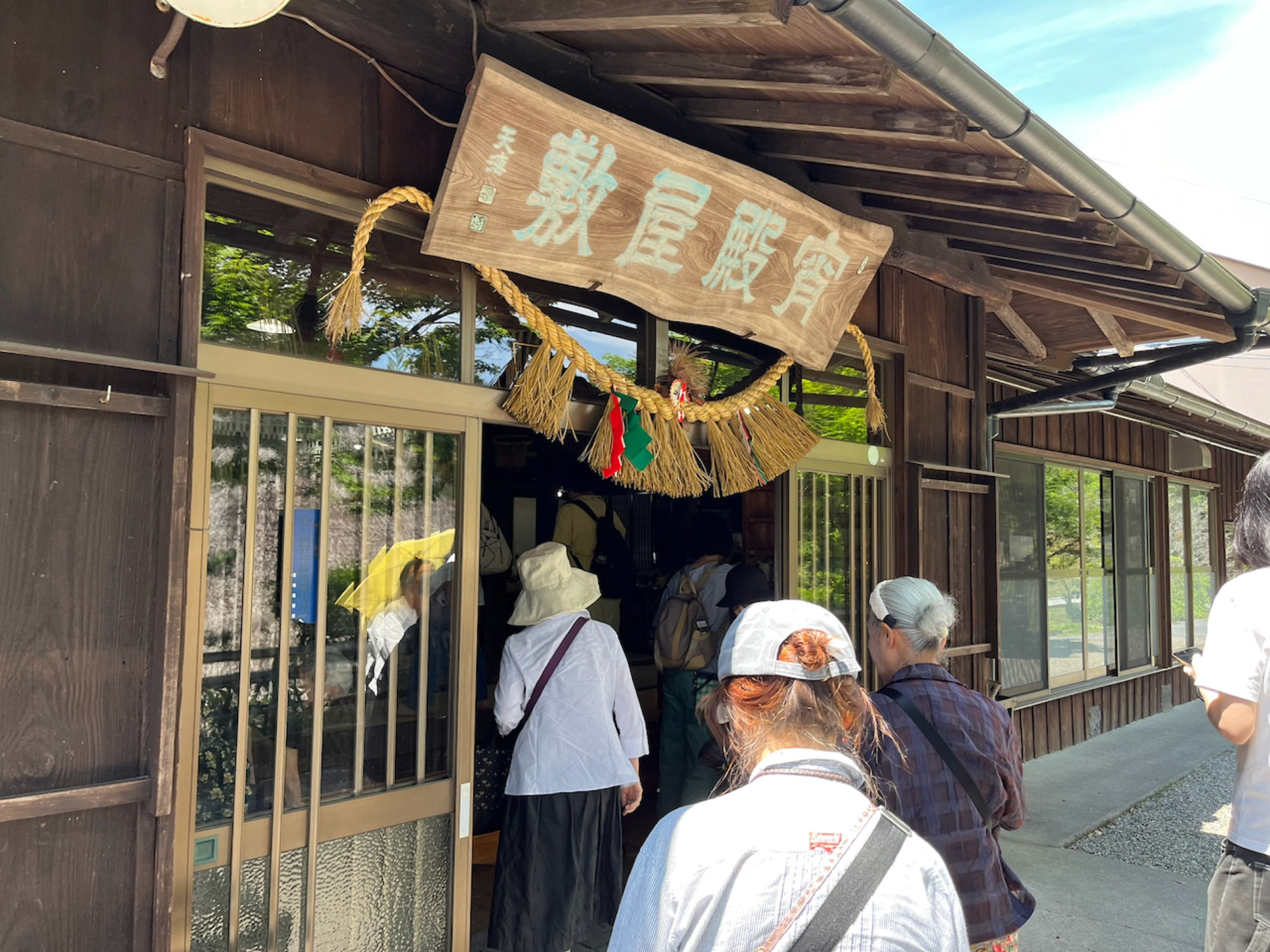
The weather had cleared up nicely from the previous day, and frankly it became a bit warm and humid, especially while hiking. Not too bad, but if you are not used to it, it's best to consume extra water to stay hydrated.
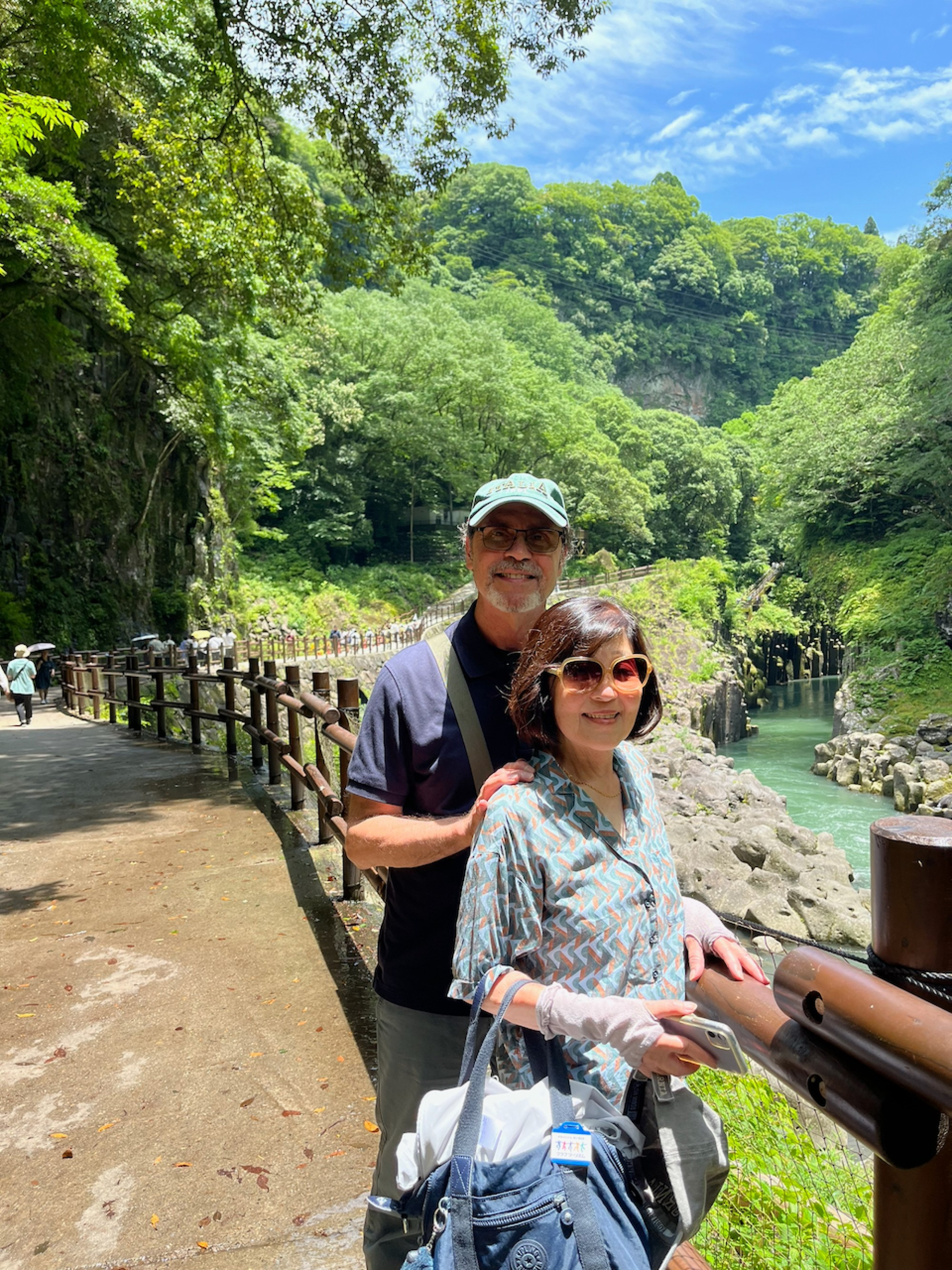
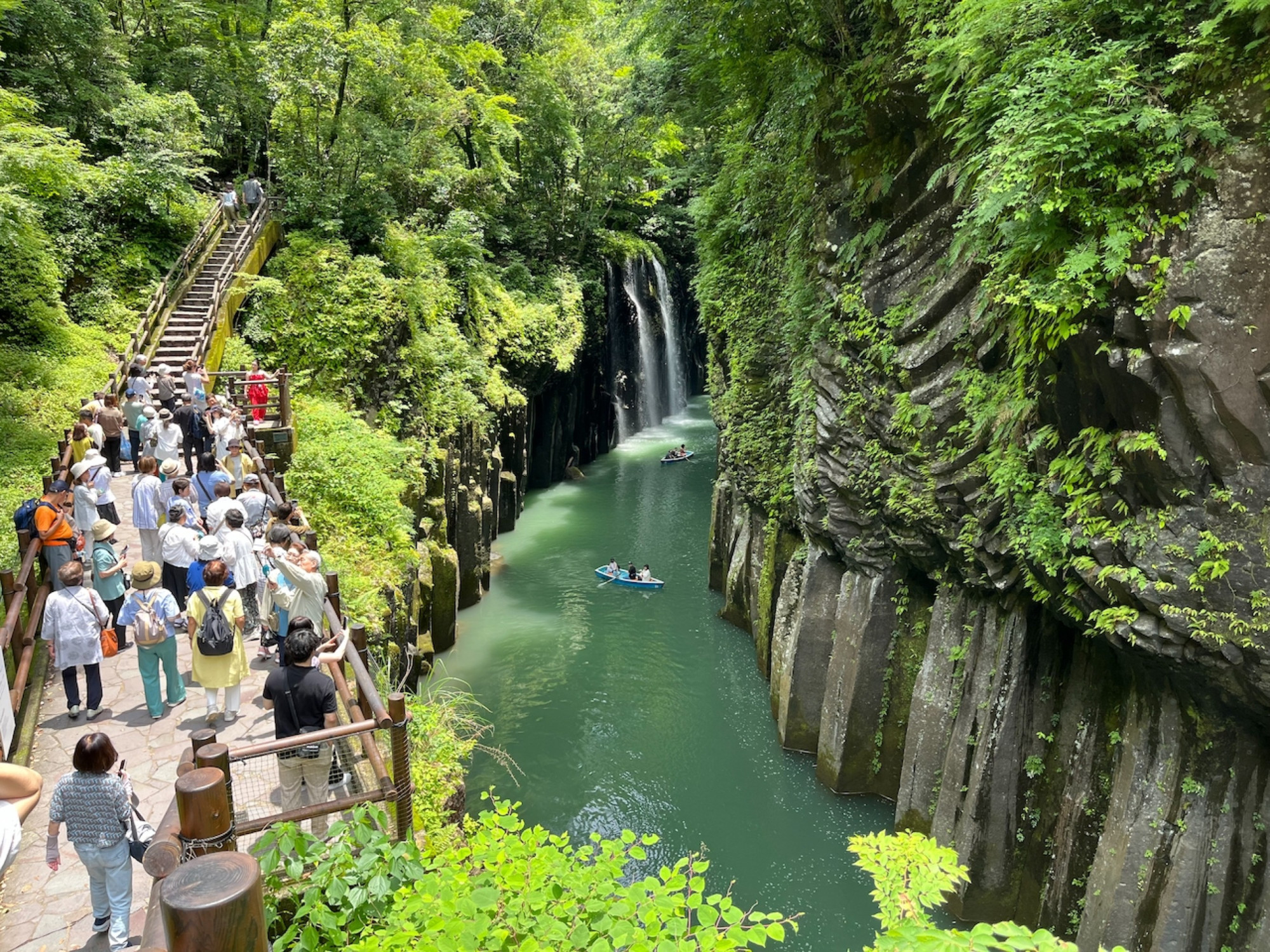
The path to the gorge followed the snaking Gokase River through the valley created a millennia ago. We were not the only tour group there of course, but I did not think it was too crowded to be annoying.
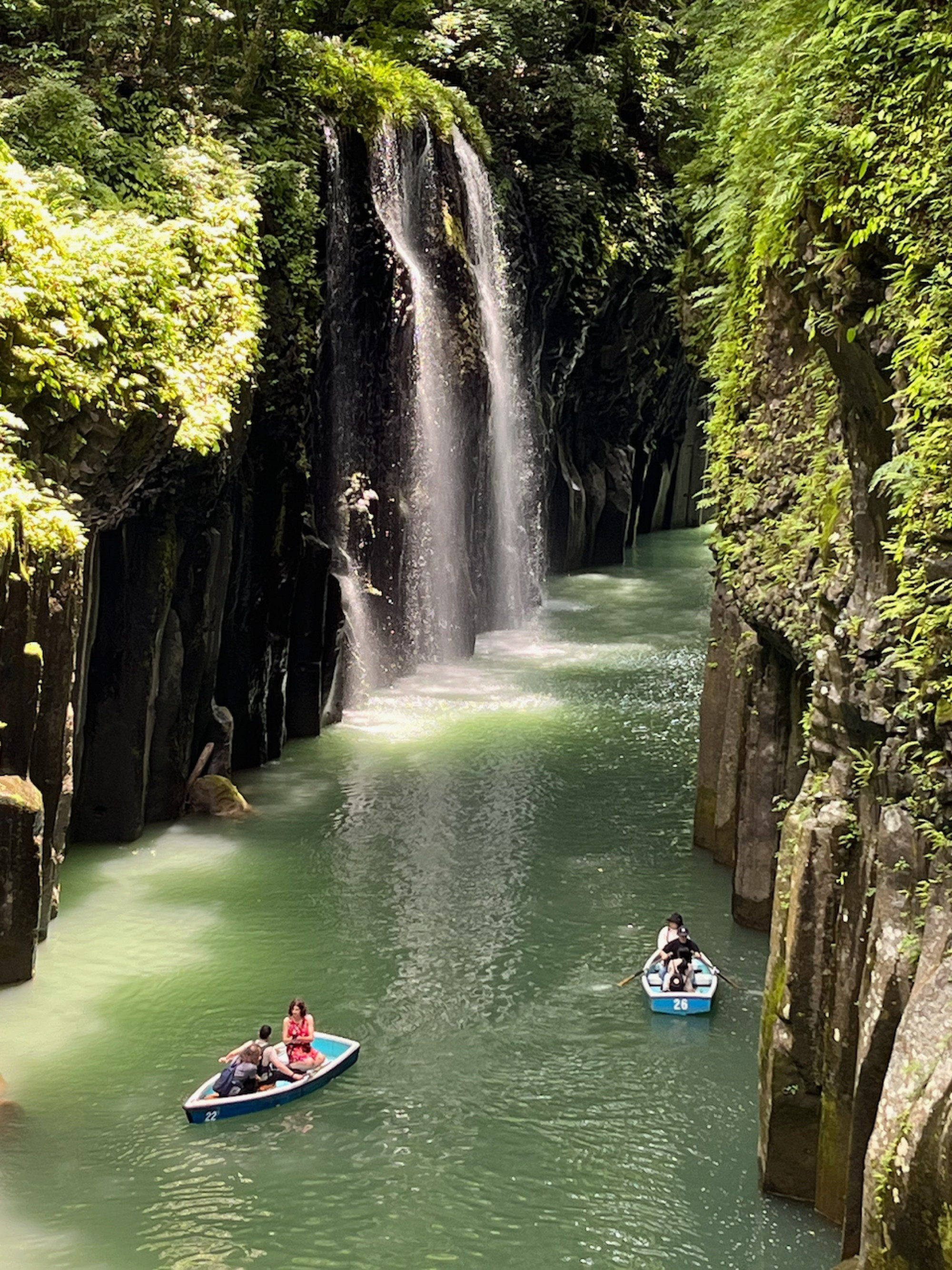
The gorge itself features Manai Falls, a picturesque waterfall spilling into the turquoise blue Gokase River. At the time I told my wife that this is one of the top five most beautiful places I have visited in Japan, and I stand by that. This tour was turning into a memorable experience in real time.
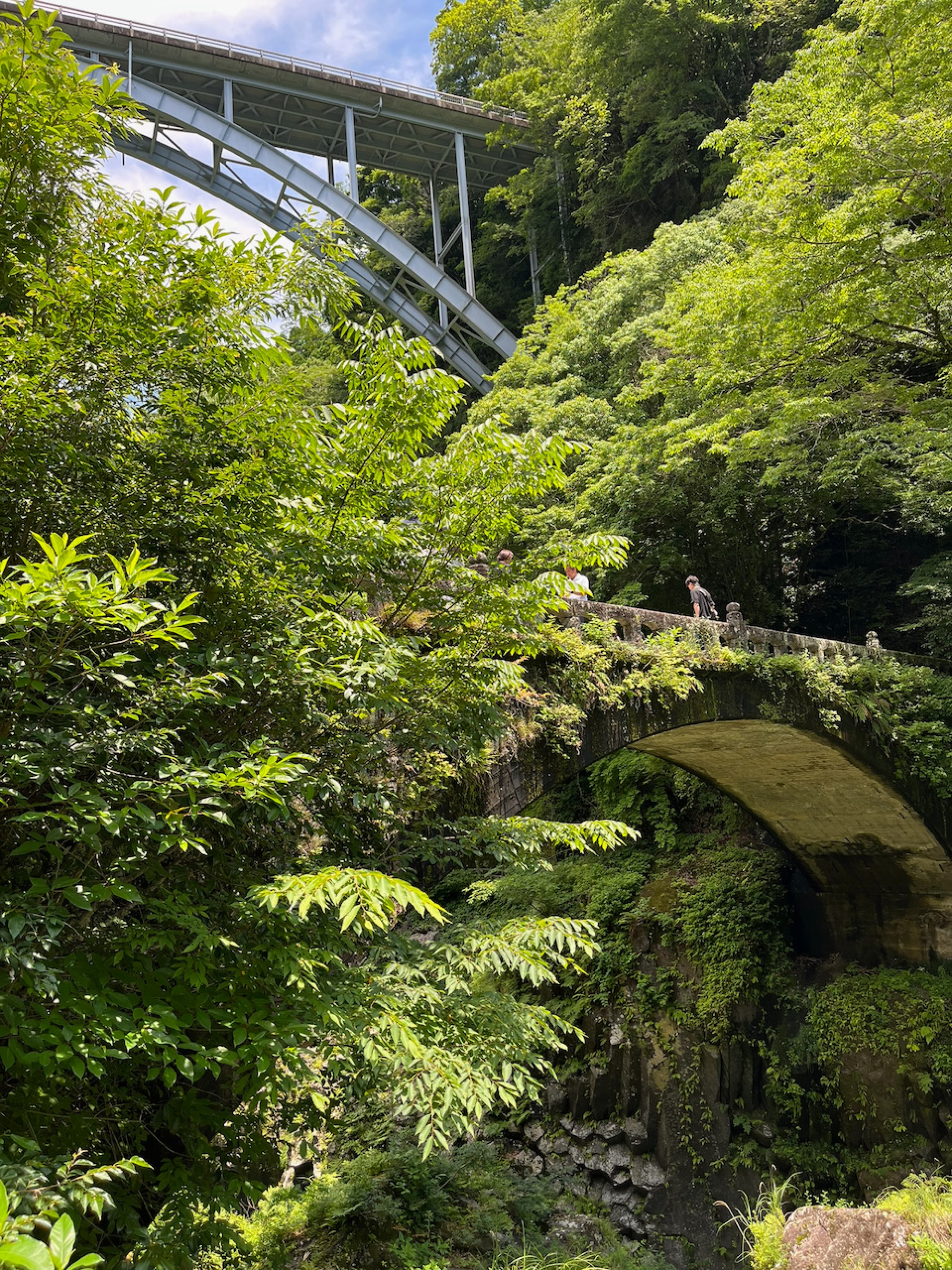
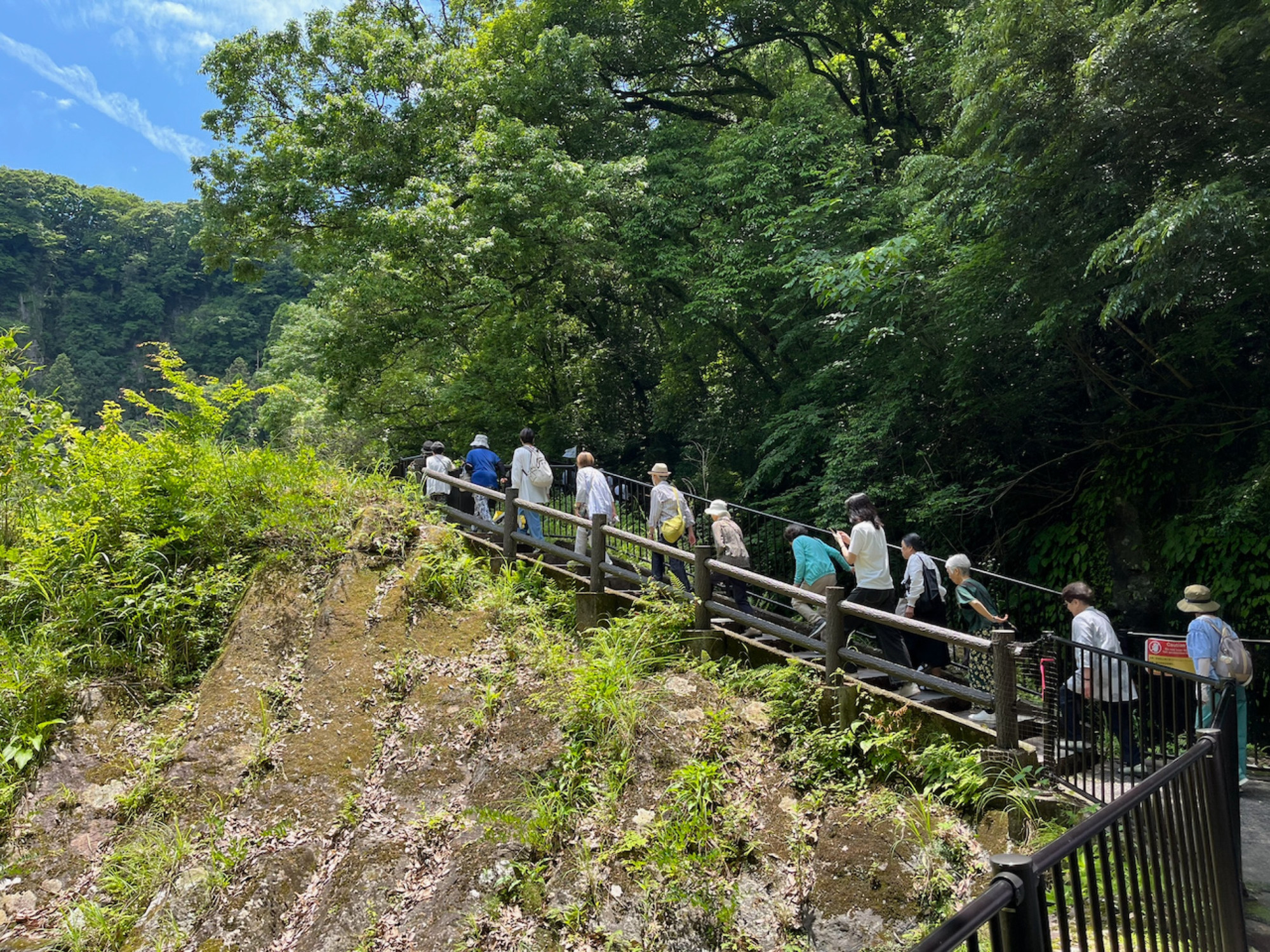
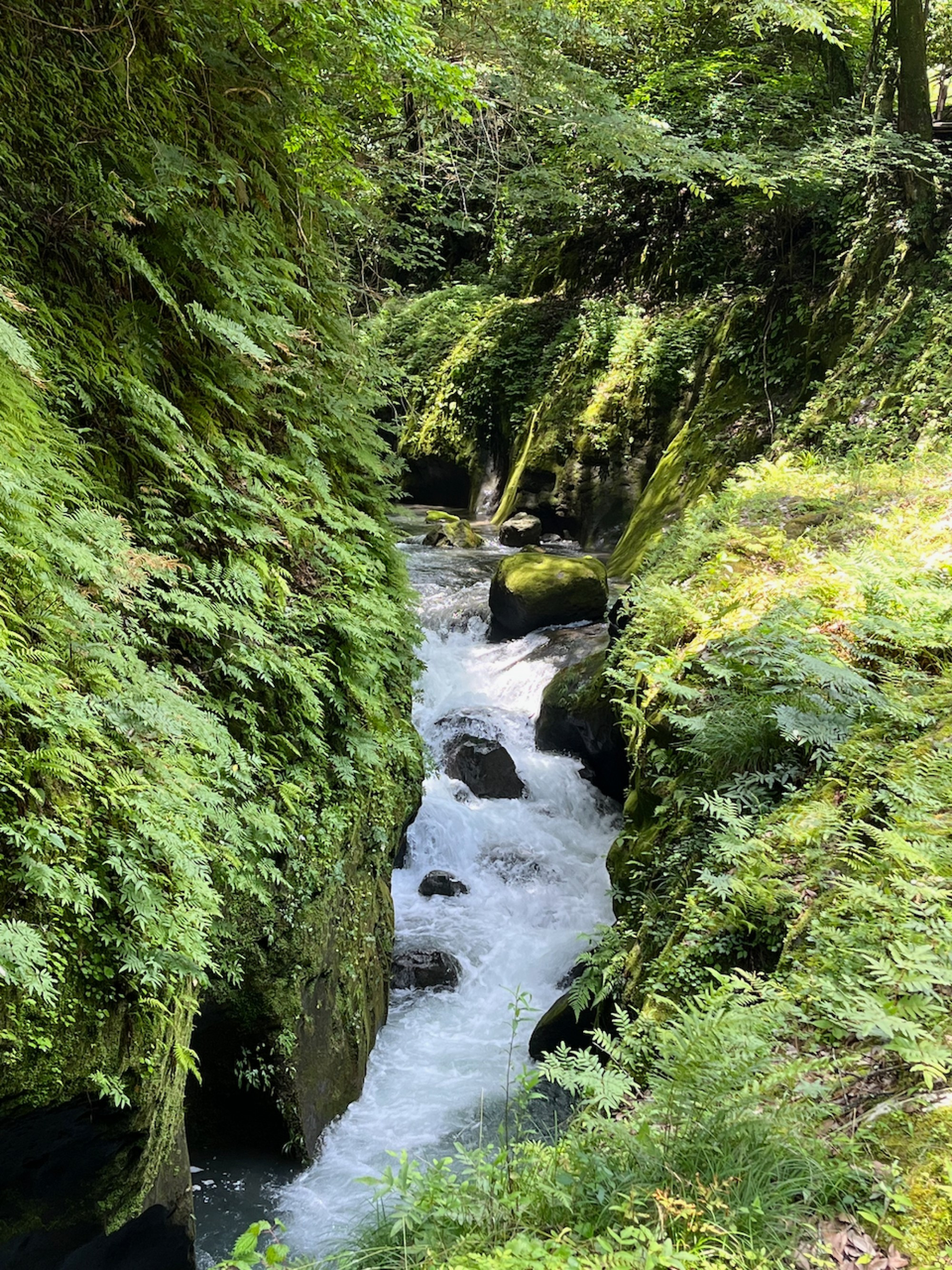
Note, this was the extent of our exposure to Takachiho. What I found out later was that Takachiho is known as the "Village of Myths," and most famously the myth of the Shinto sun goddess Amaterasu. I'm not going to go into detail about it here, so ask your favorite AI about it and I'm sure you'll get the full story.
Tougenkyo Garden
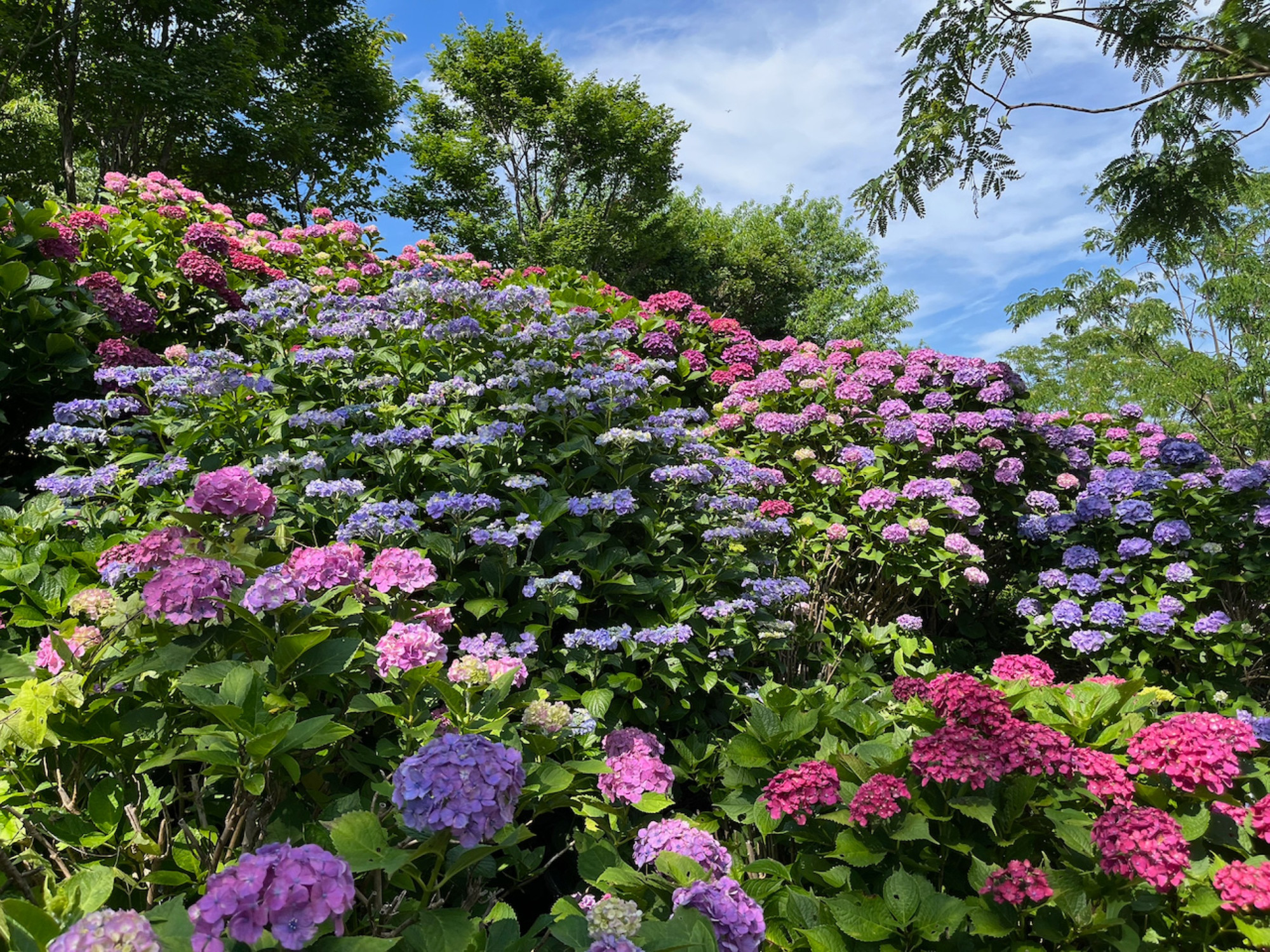
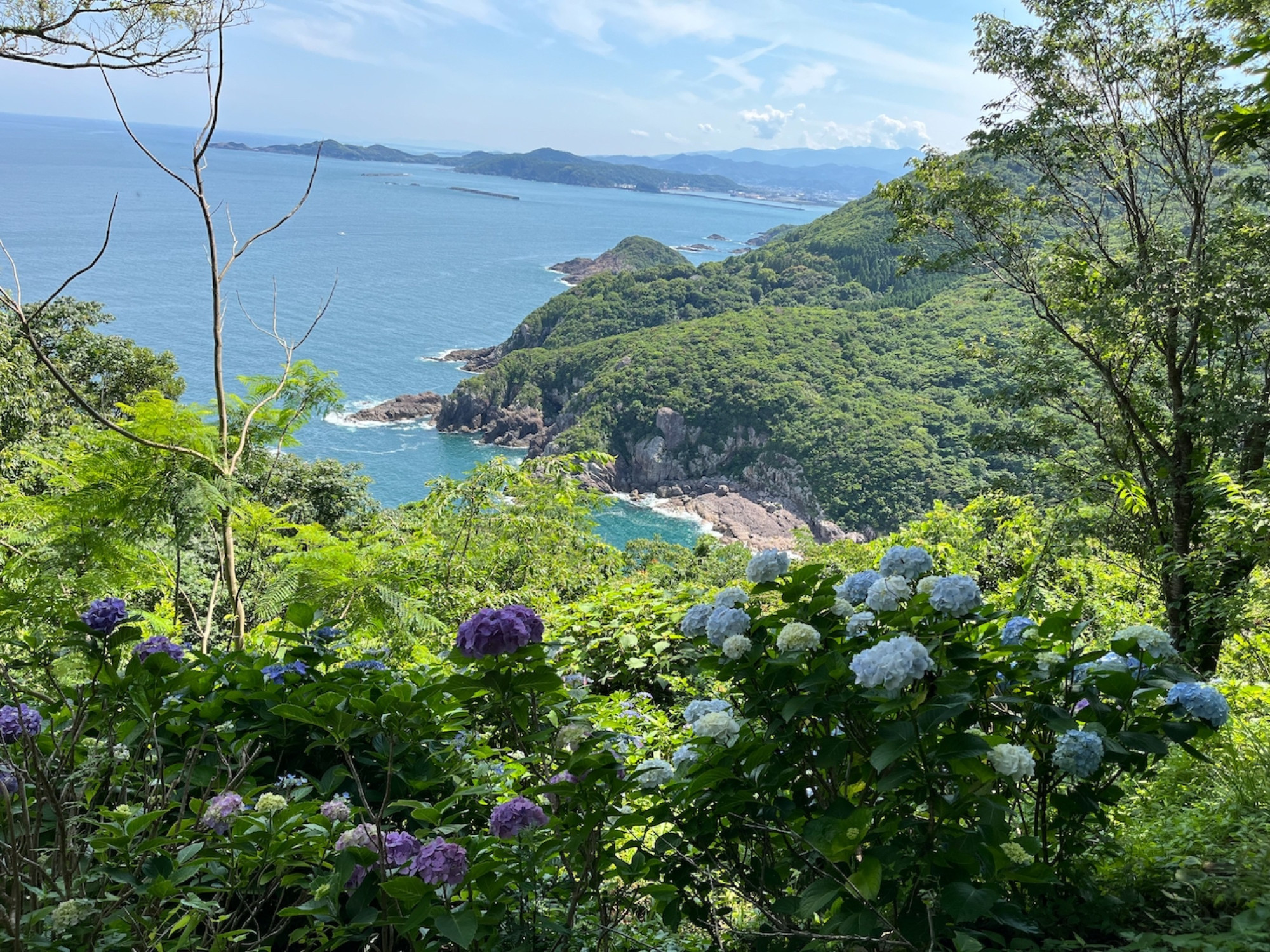
We next proceeded east, back towards Nobeoka, and then south towards the coast to Tougenkyo Garden. The garden is at the top of a coastline plateau, and offers beautiful panoramic views of the Pacific Ocean. The garden's main feature is its abundance of hydrangea plants. This was blooming season, so the fields and hillsides of hydrangeas of different colors were really stunning.
This place is worth the visit if you like elevated coastal views, and in spring, the hydrangea blooms. But it is out of the way, so your best bet might be a tour bus like ours.
Miyazaki City 2nd Night
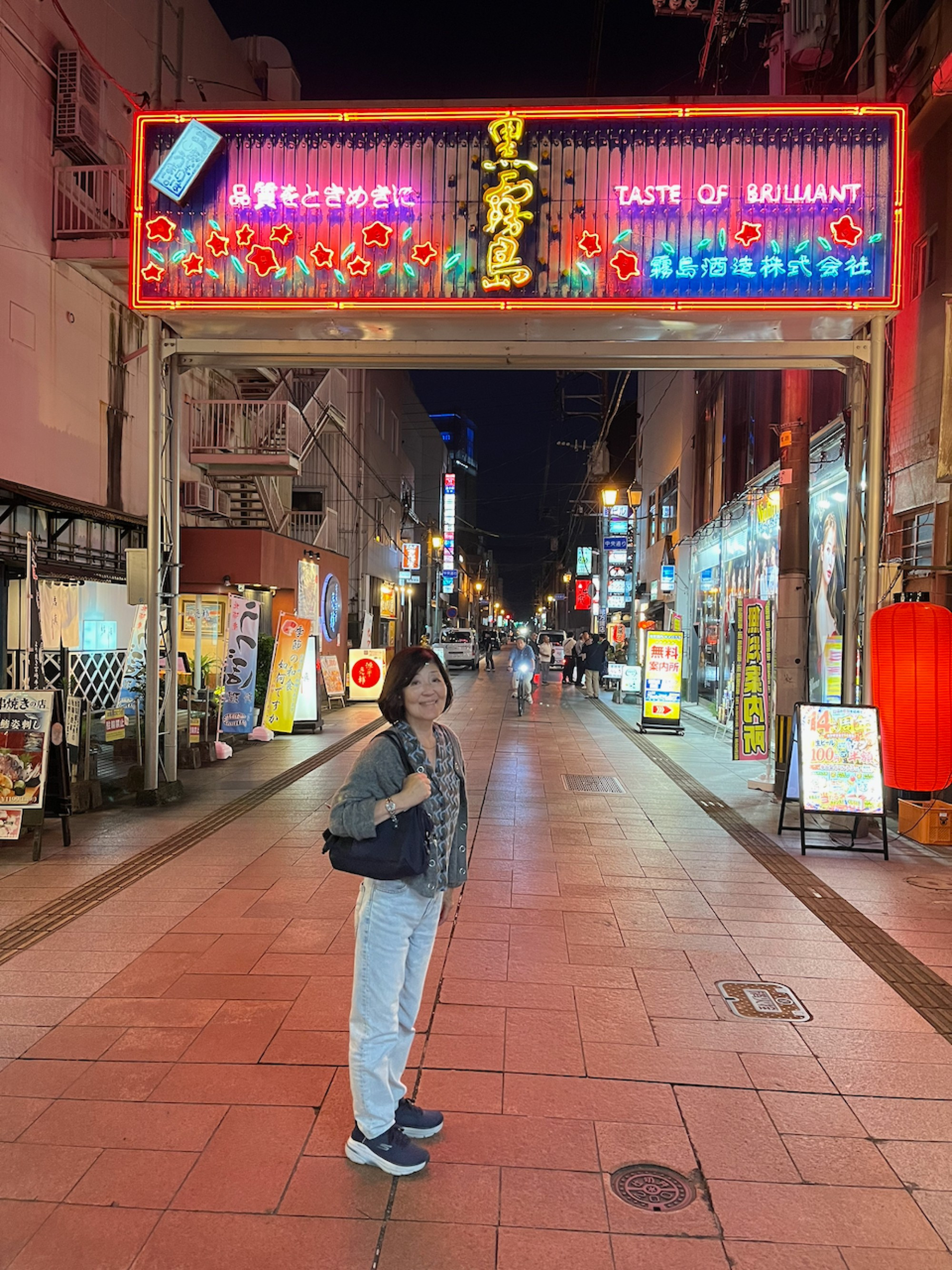
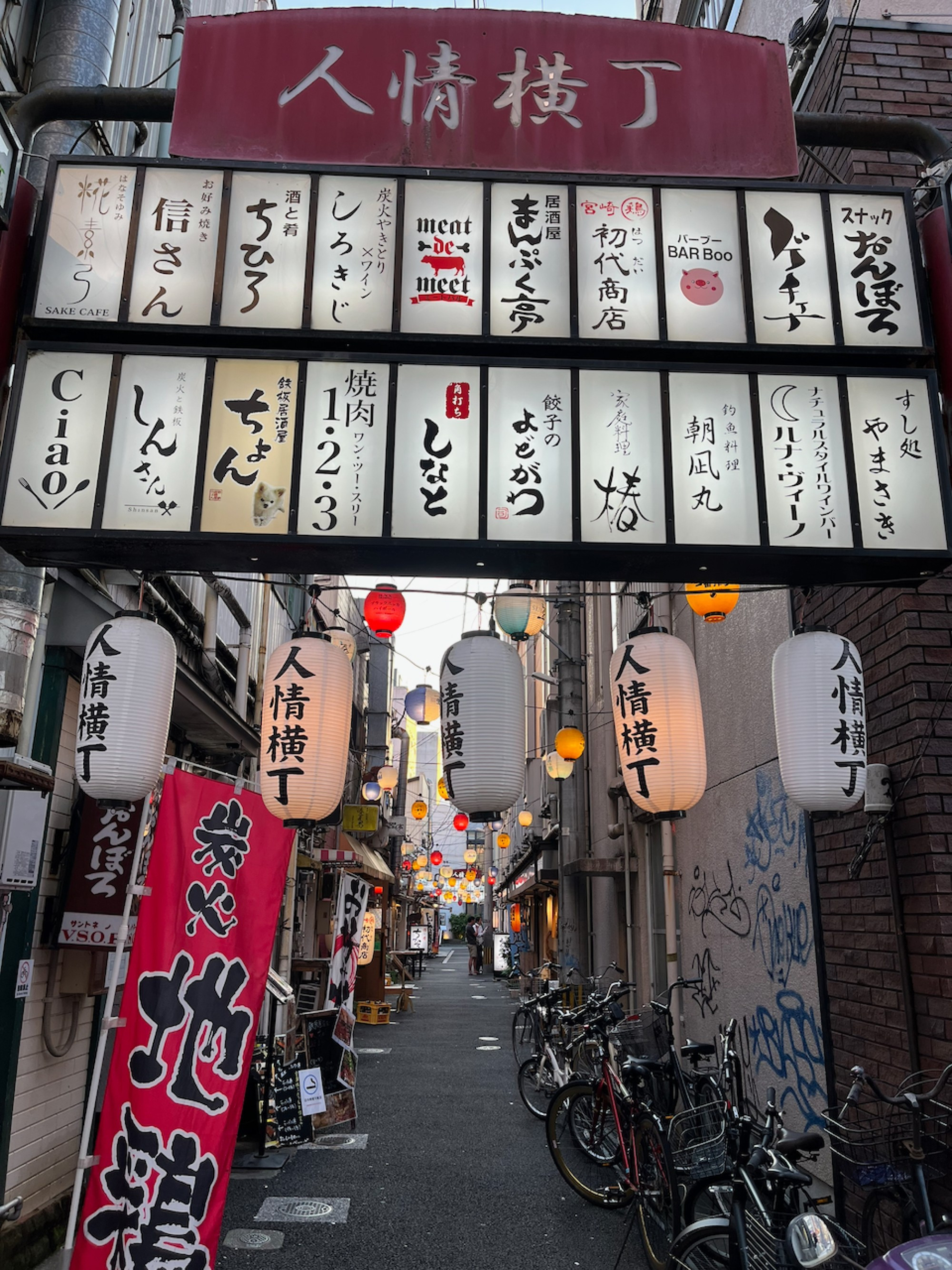
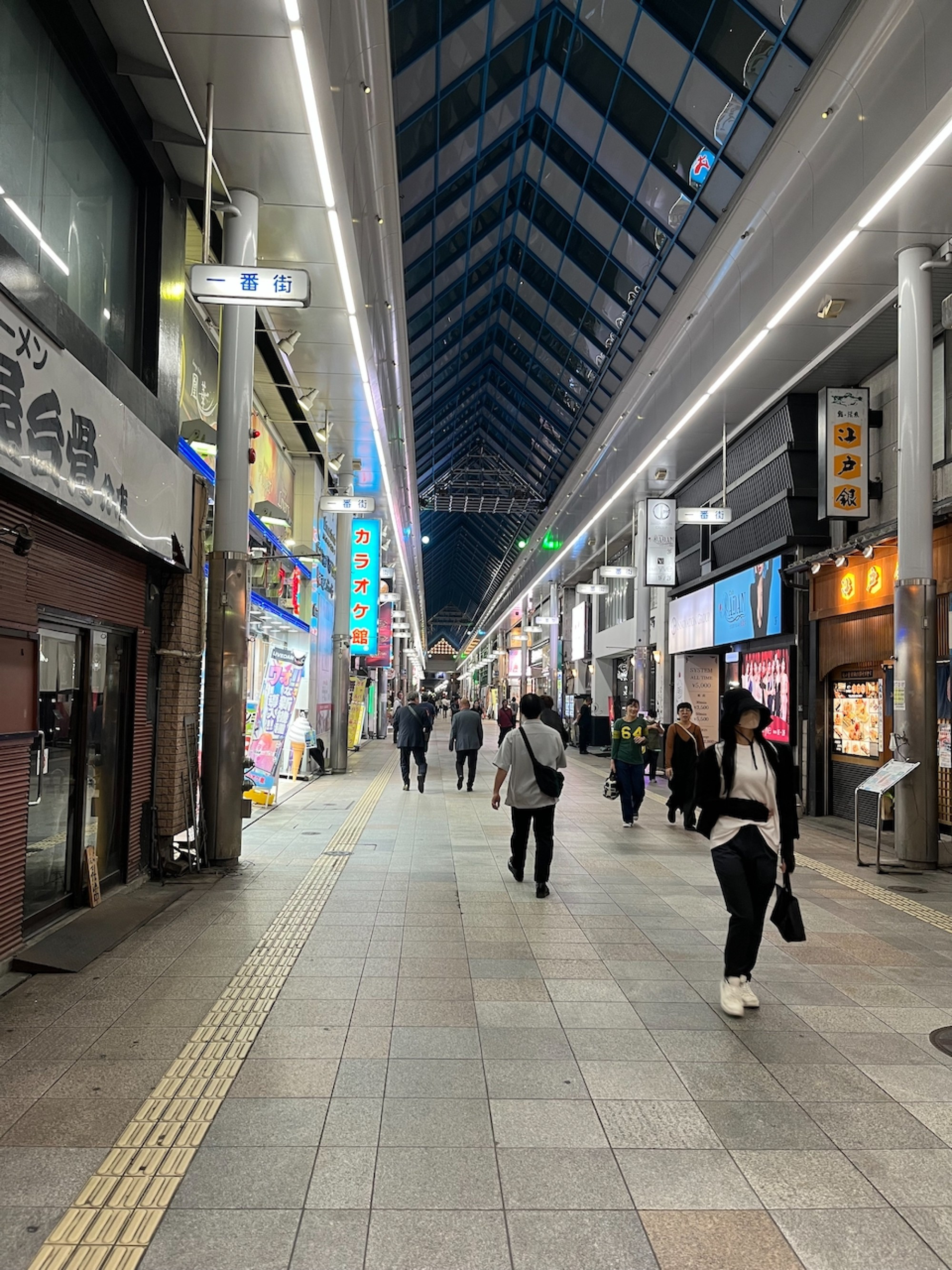
The bus took us back to the hotel, and we had the evening free. The tour only included lunch, so we were on our own for dinner. At first I thought we might try some more local cuisine that Miyazaki is known for, such as Chicken Nanban, which is fried chicken with a gooey tartar sauce on top. We had that yesterday at lunch anyway, and I was not a fan. So, we went to an Italian restaurant! Tegge Taverna is a modern Italian restaurant in the restaurant quarter as I call it for want of a better name. The salad and pasta were good, and we even had the famous Miyazaki Beef, a wagyu variety that is very popular.
If you visit this cozy little city I suggest you explore those backstreets in the area of Chuo-dori and Ichibangai Street. At night the area is nicely lit up, with each restaurant more enticing than the last.
Nichinan Jacaranda Forest
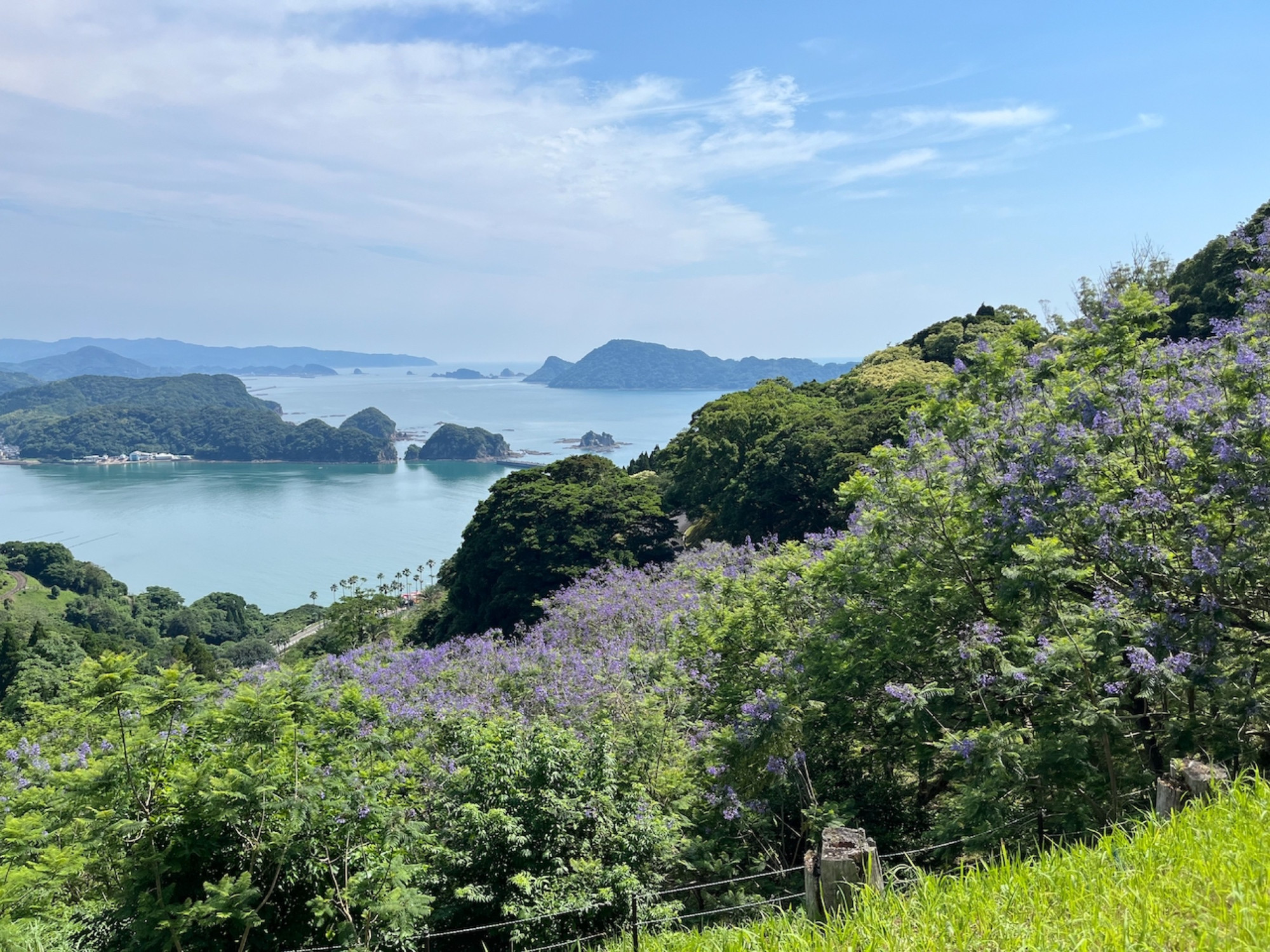
The next morning we were off to another coastal destination - Nichinan - which is south of Miyazaki. As our tour guide Jane was talking about it, she would say Jacaranda, which to me sounded like jack-o-lantern! It wasn't until we parked the bus at Jacaranda Forest and got out that it occurred to me that she was talking about the trees with purple blooms. The Jacaranda trees were planted from seeds in 1964, an import from Brazil. Today they line the roads and dot the hillside facing the bay. Quite a pretty sight when they are blooming their soft purple flowers.
But honestly the real attraction to me was the view of the surrounding coastline. It reminded us of Hawaii, or even Thailand. So tropical, you'd think you were on a remote island in the Pacific.
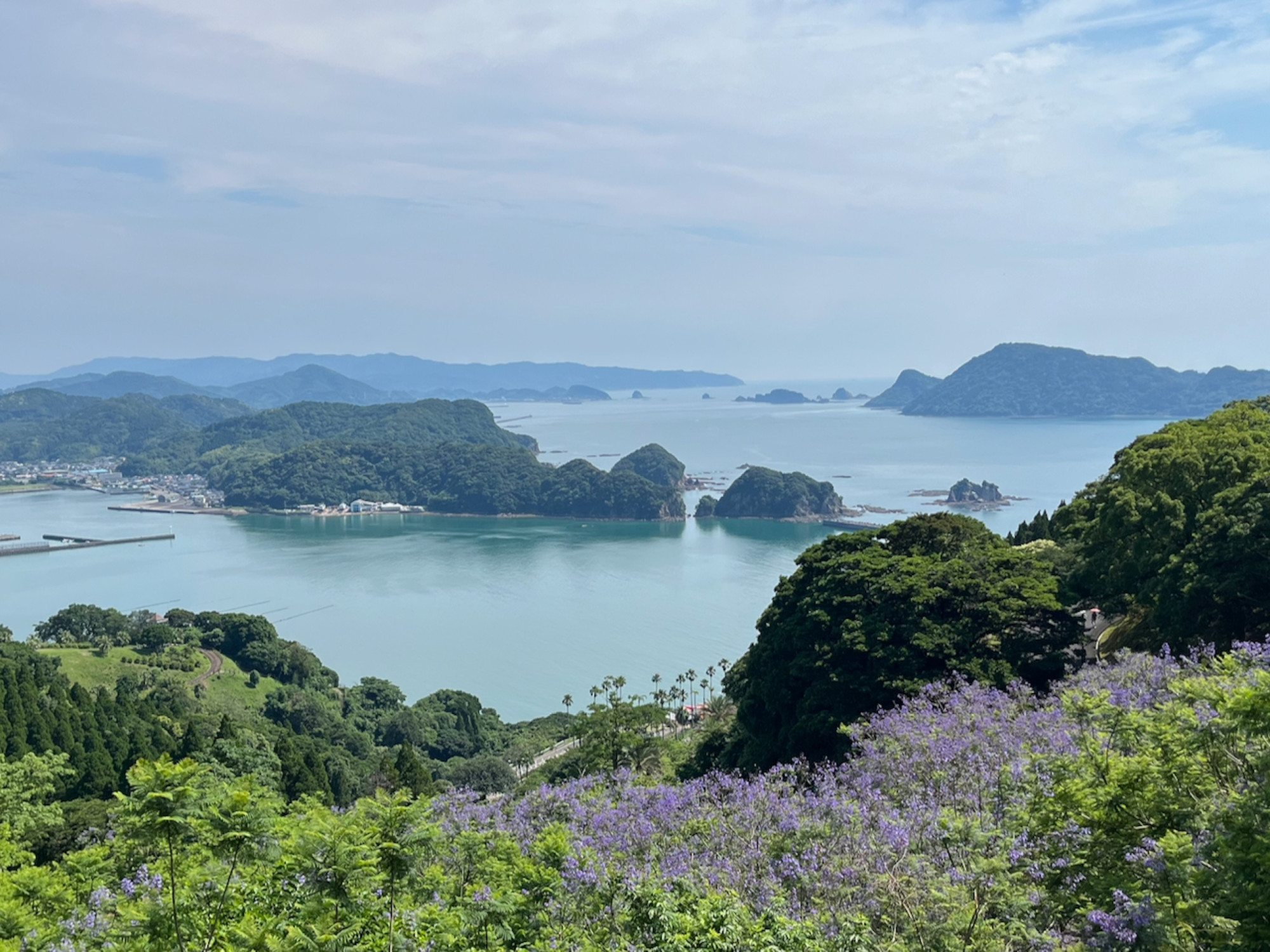
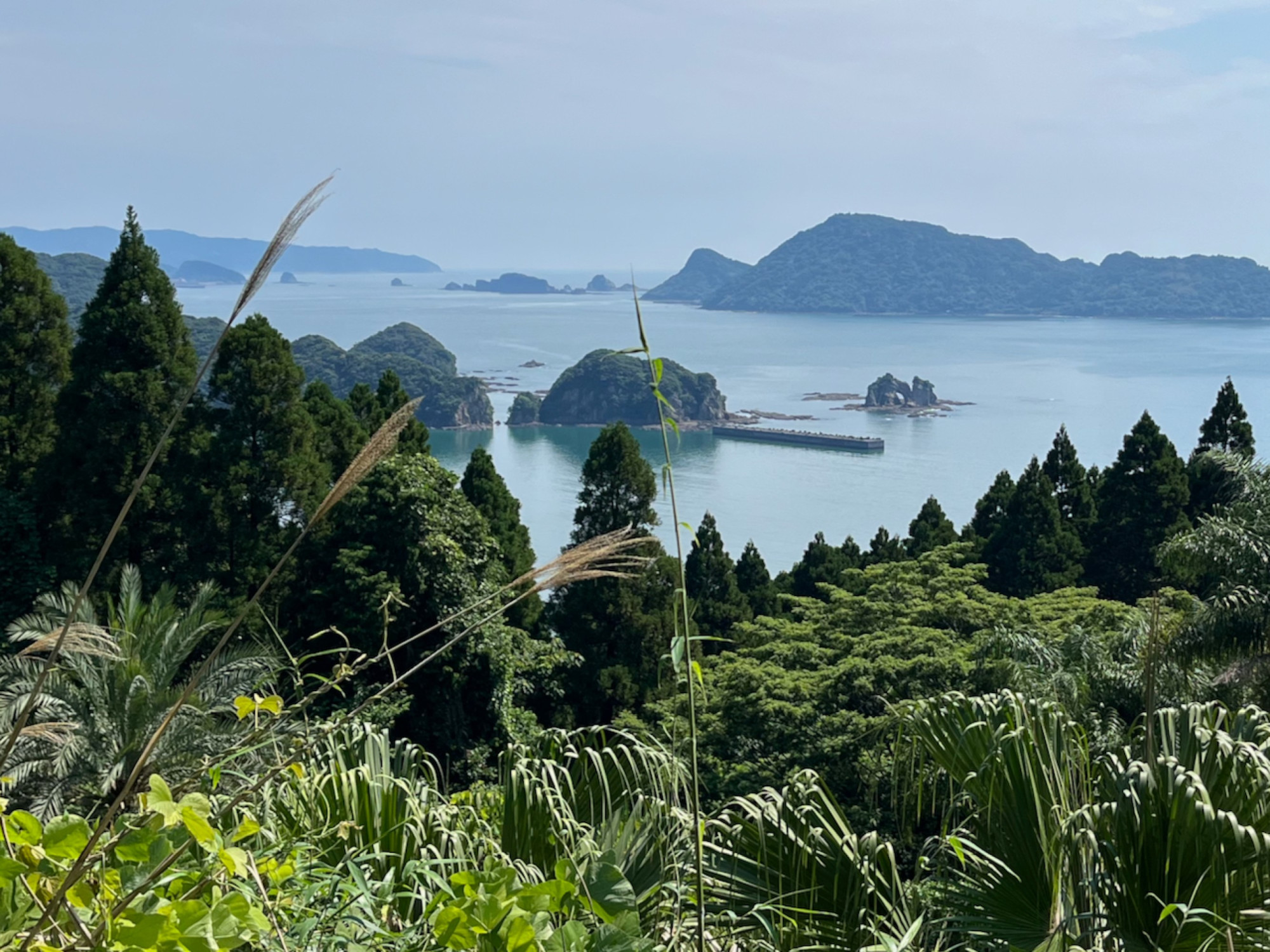
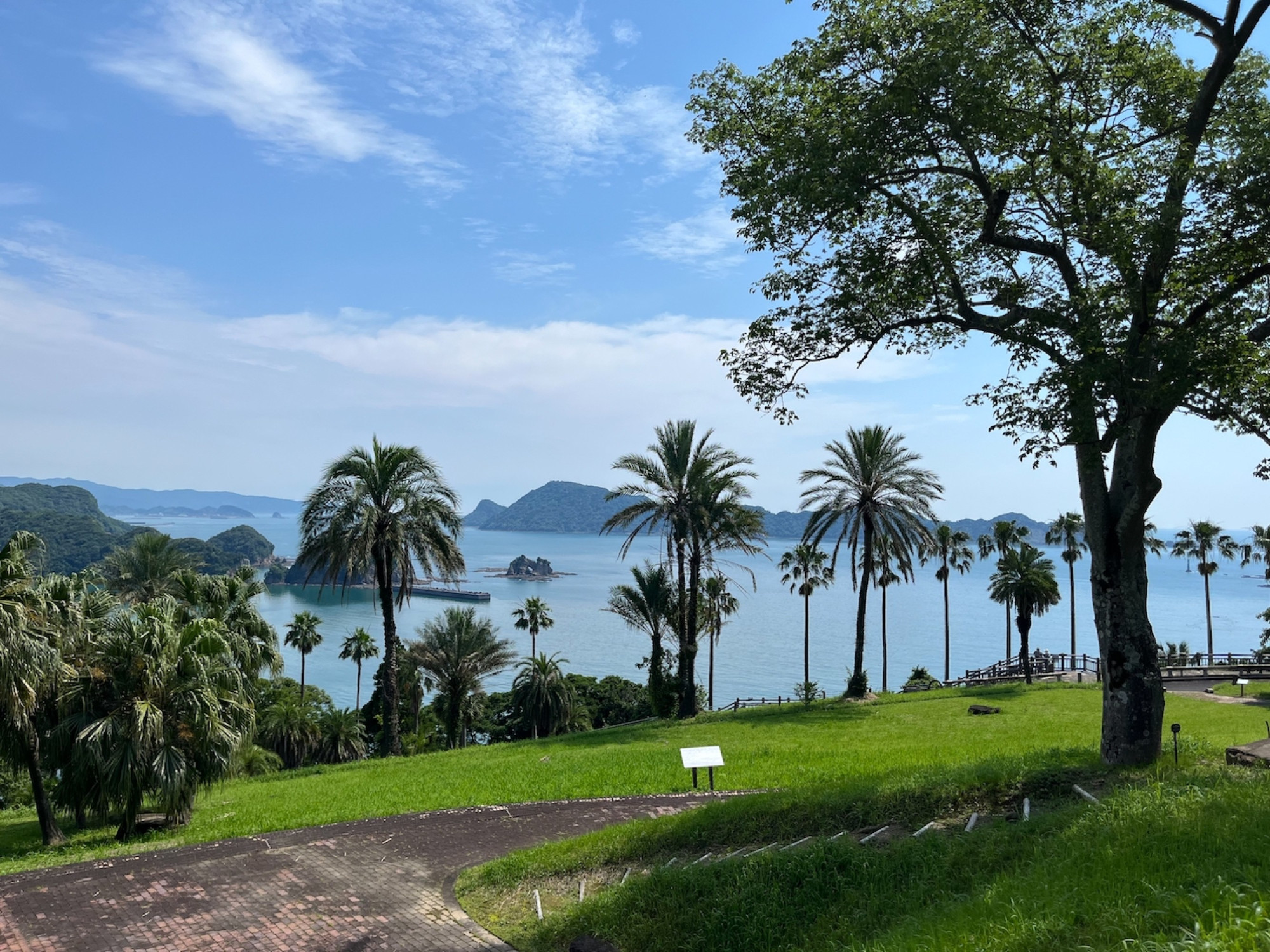
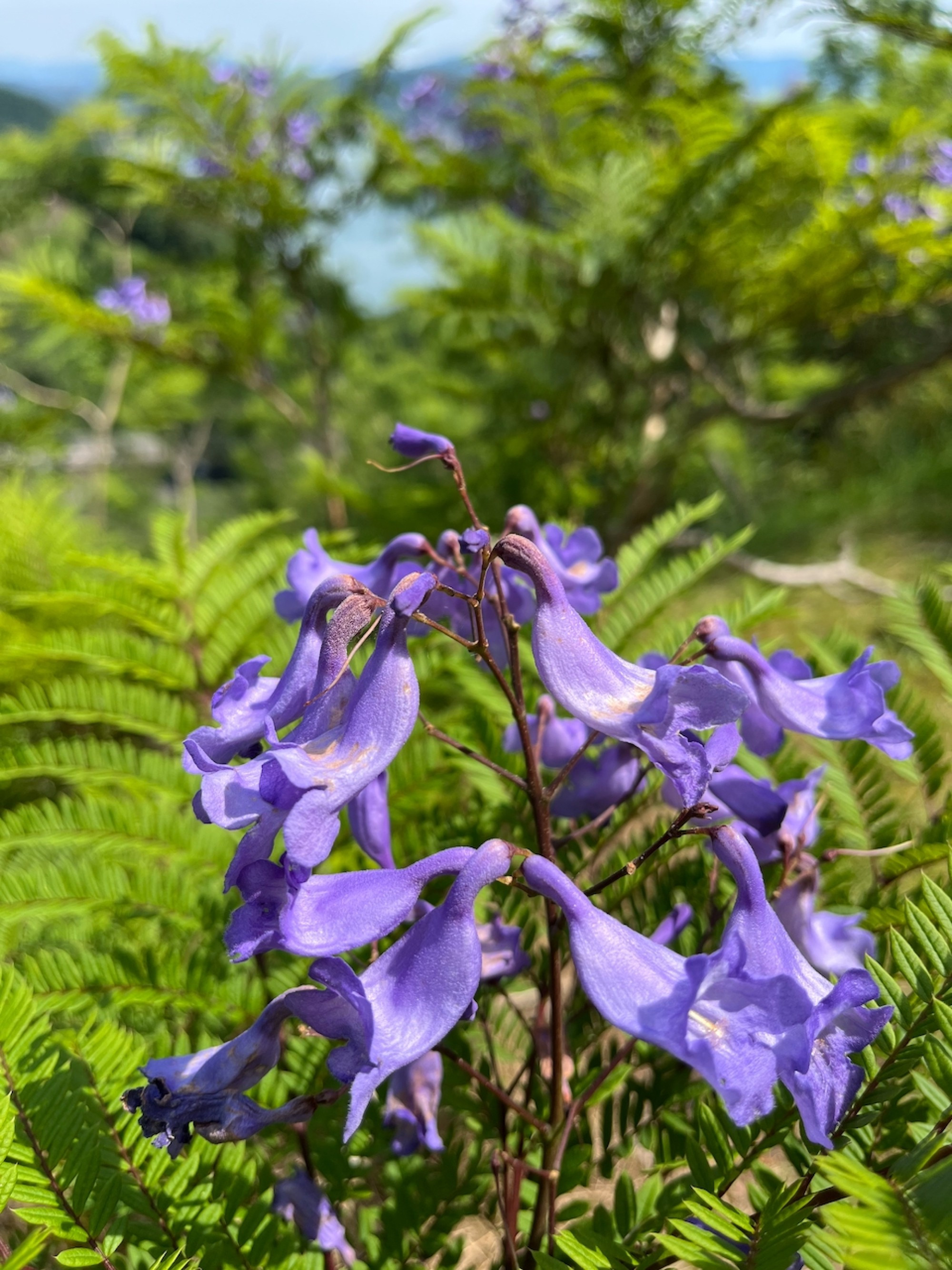
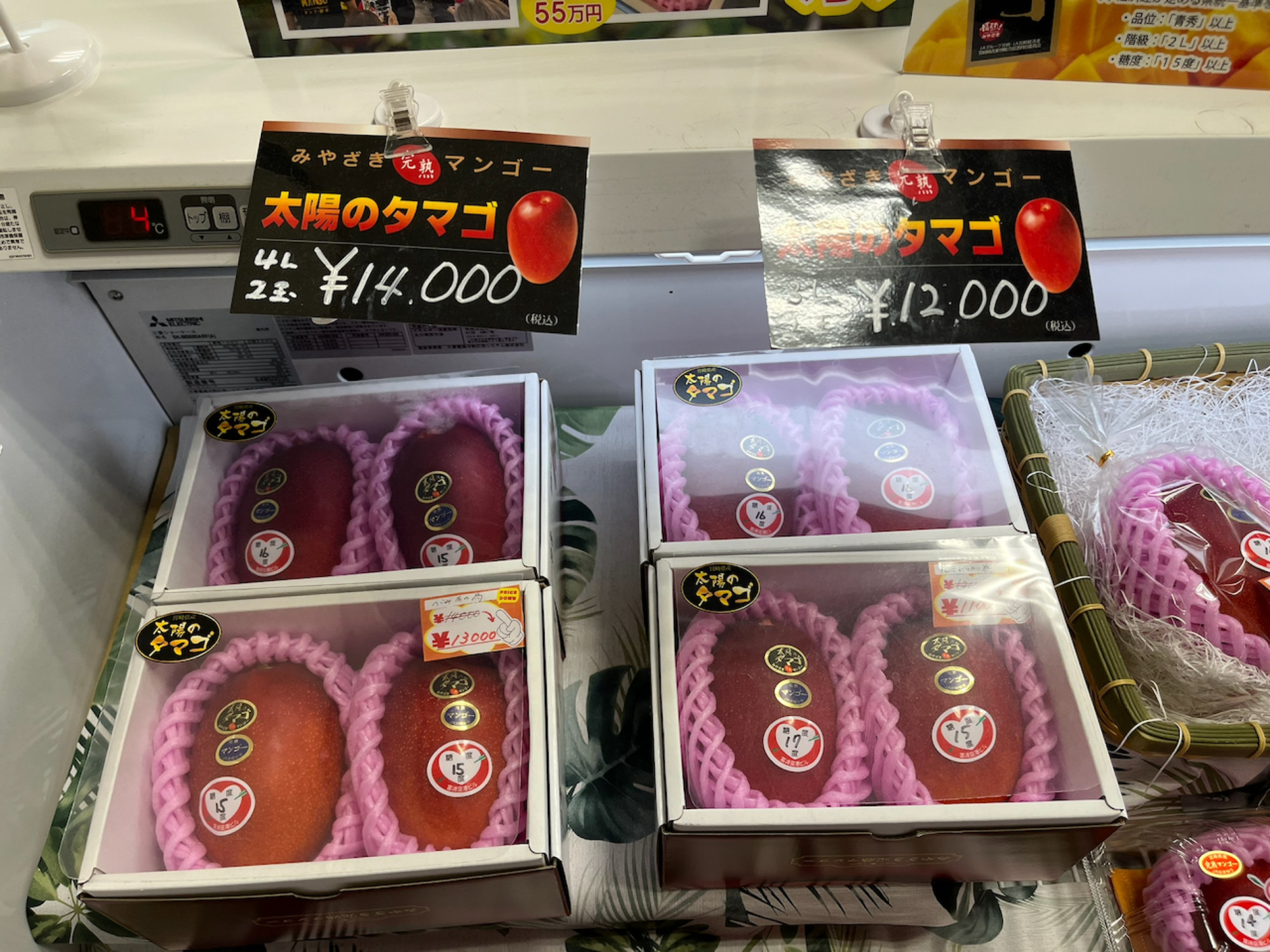
The bus dropped us off at the top of the hillside, with the idea that it would meet us down below at the visitor center. When we got to the bottom we found a shop that sold various souvenirs, including the local mango variety. Wow, one taste and we were hooked into buying a couple of the delicious red mangos for 2300 yen. Yes, a steep price, but you should see what they were charging at the airport!
Aoshima Island
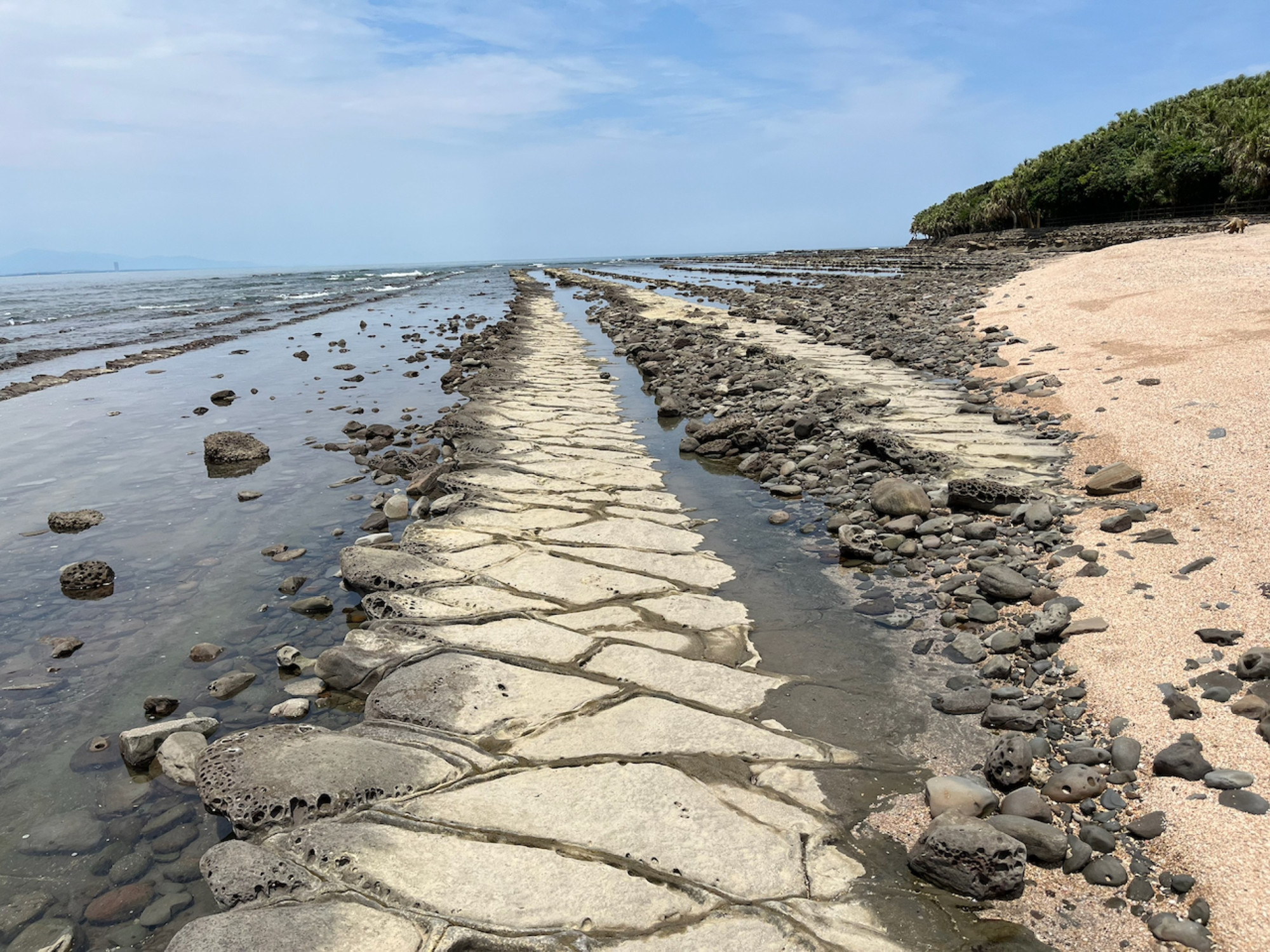
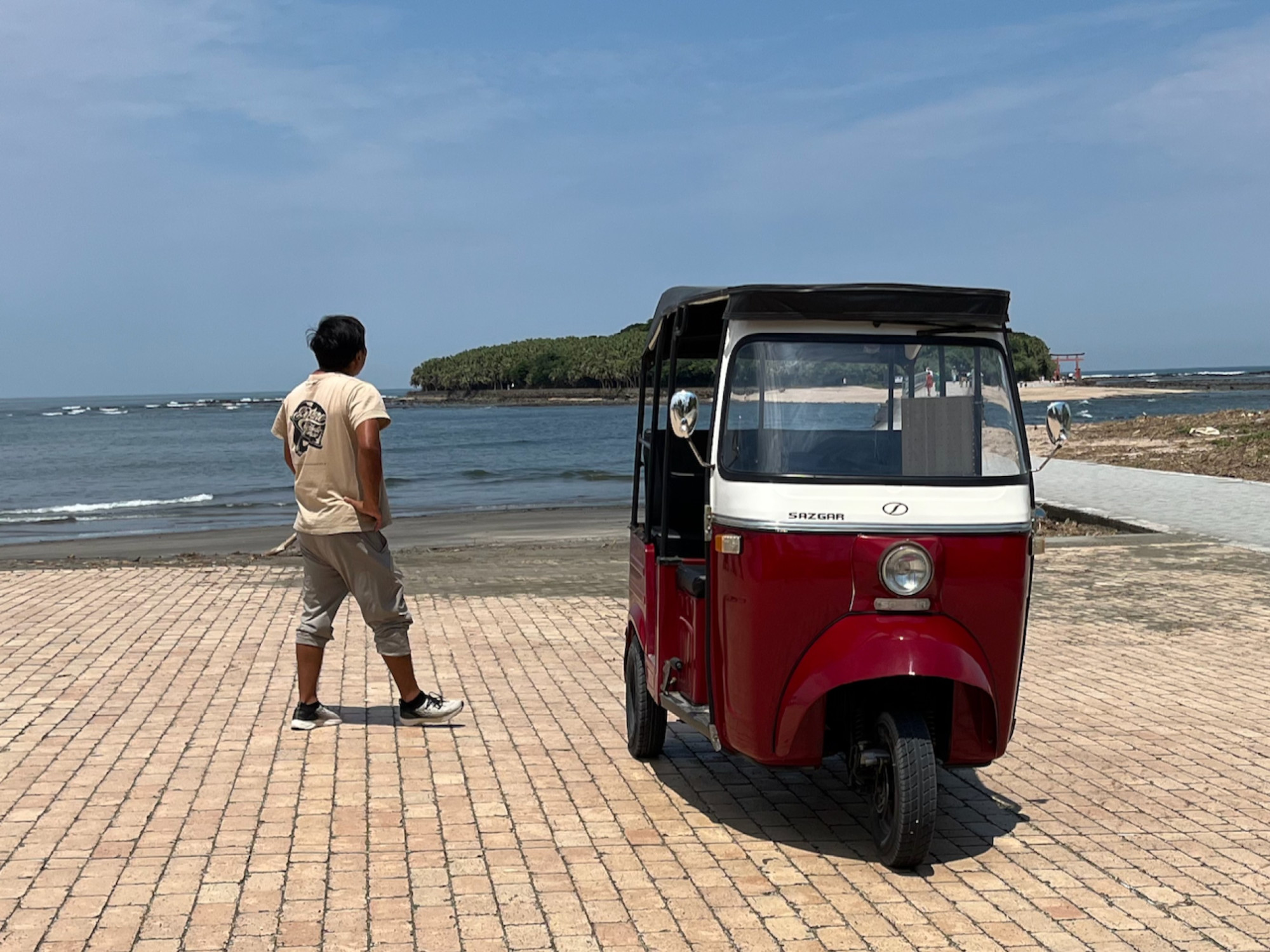
Our last stop was also in Nichinan, backtracking north, closer to Miyazaki. Aoshima offers a fascinating look at what tides can do to the seabed. Especially if the tide is low, you'll see rock formations that resemble a super-sized washboard, hence its nickname, Oni no Sentakuita, or Devil's Washboard. When I first saw it I thought for sure that it was man made, as it looked like rows and rows of raised rocks. Each row looked flat, like a path to walk on. I was summarily corrected by the tuk-tuk driver that drove us back from visiting the shrine. Geologically it’s referred to as a wave-cut platform or shore platform.
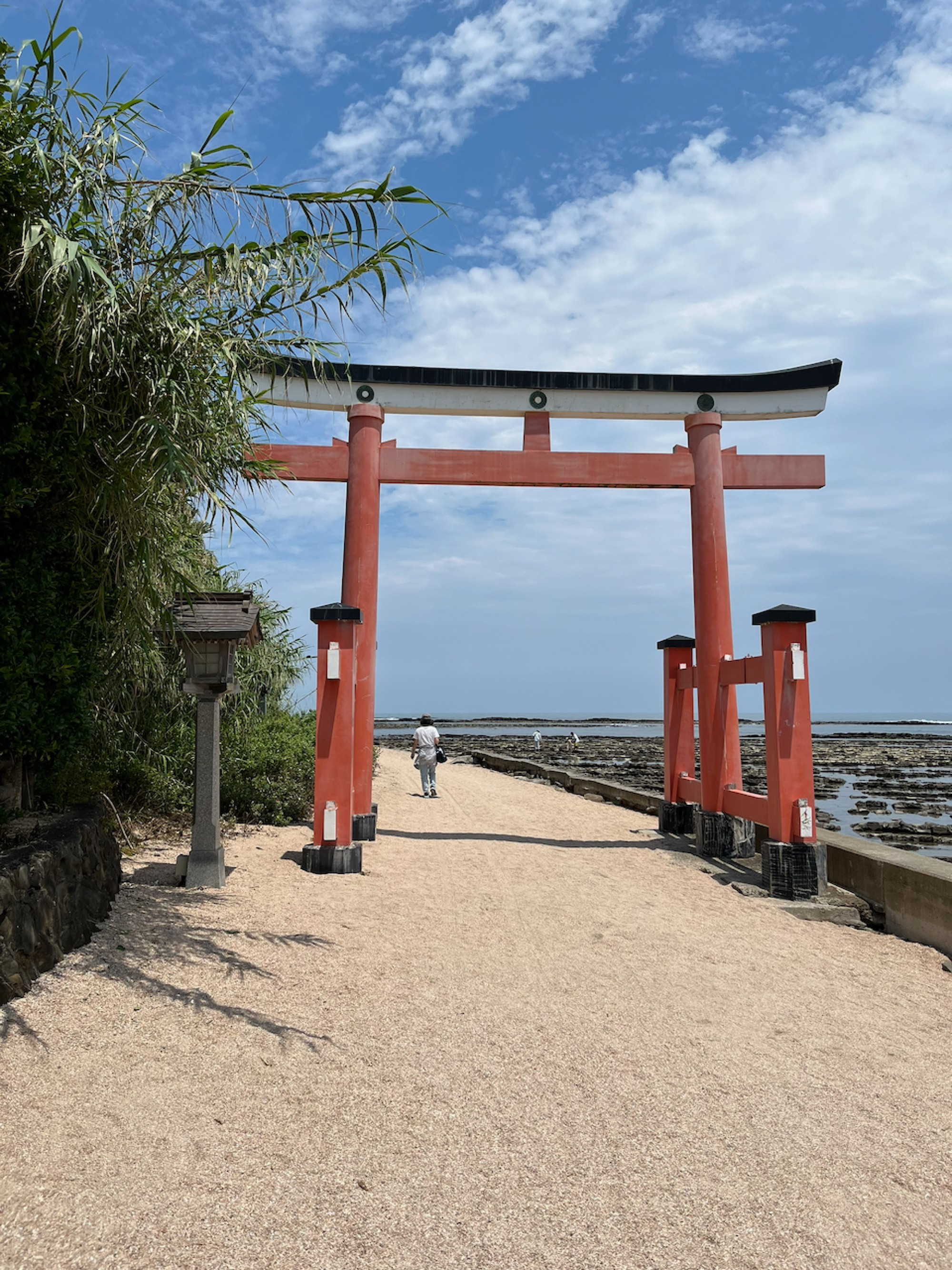
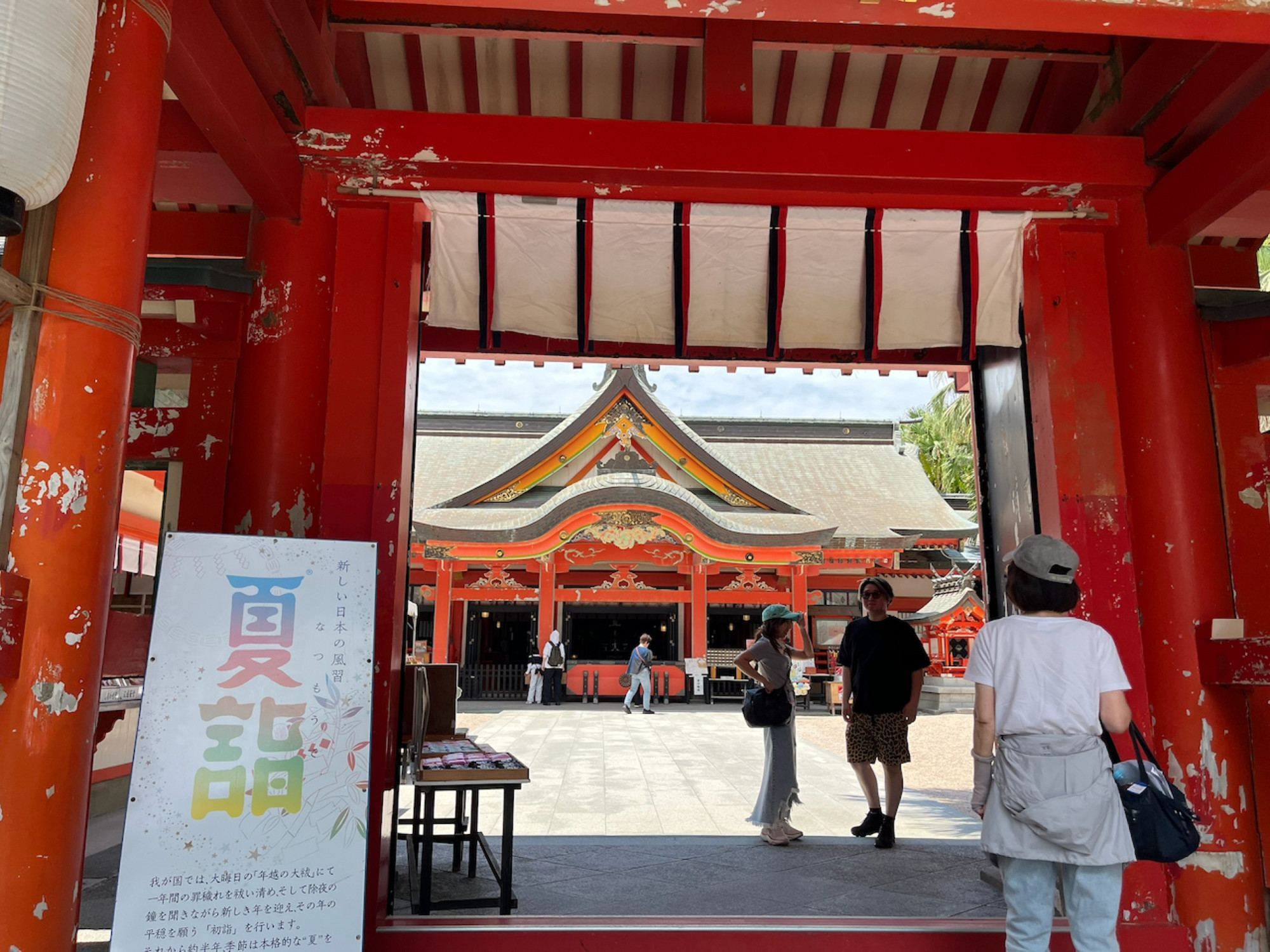
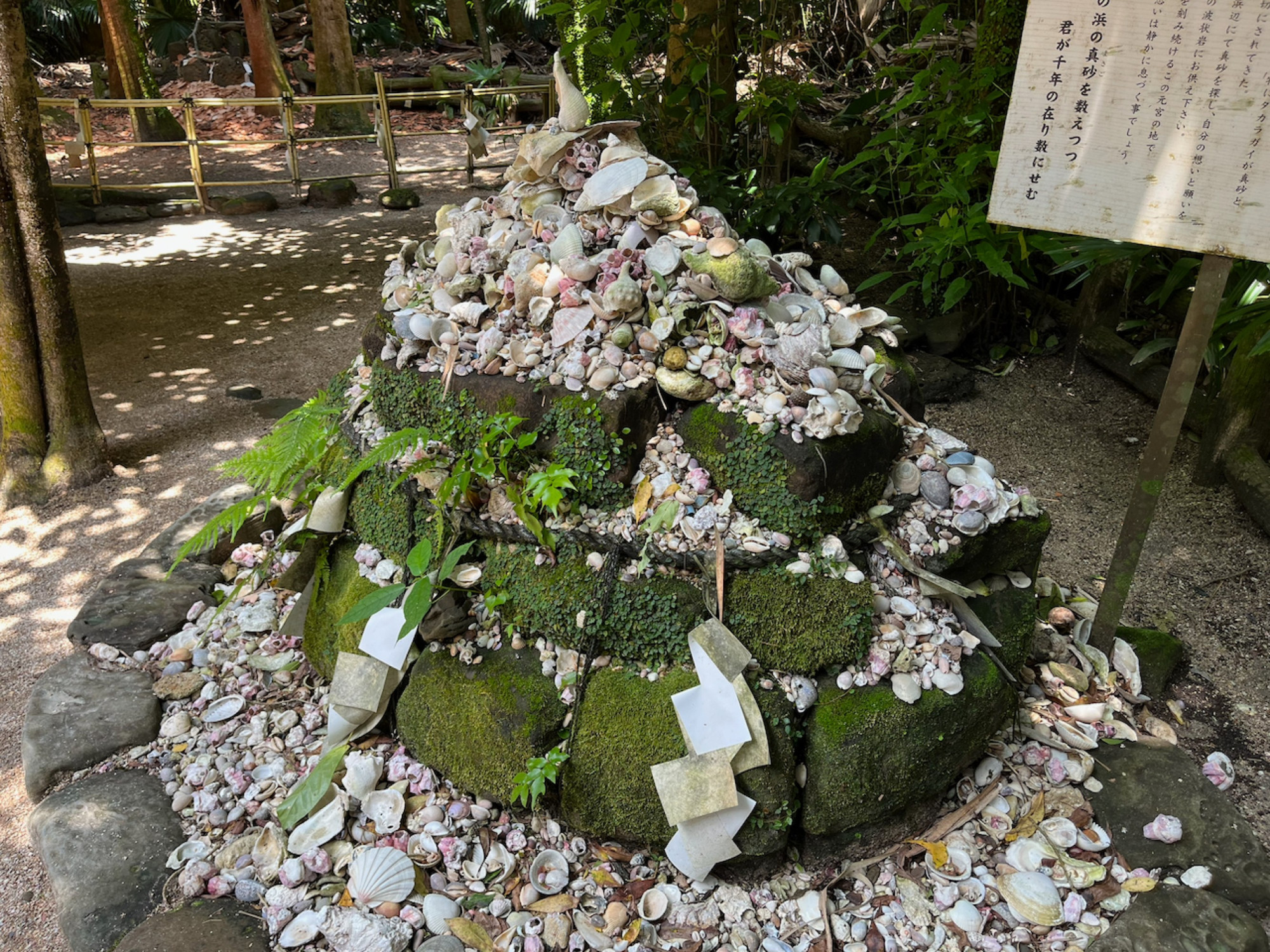
The main focal point on the island is Aoshima Shrine, a Shinto Jinja that specializes in answering prayers for the lovelorn. There is a place to write up your "wholesome" romantic desires and hang them at the mini-jungle path next to the main building. Who knows, maybe the gods will grant your wishes!
Miyazaki Airport
Our last destination was the airport at Miyazaki for our trip back to Haneda. We saw a lot in just a few days, ranging from tropical forests, waterfalls, and gorgeous coastlines to the vibe of downtown Miyazaki. If you decide to go on a trip like this, I'd highly recommend doing it in the spring as we did. And don't forget the mangoes!
If you are interested in learning more about the tour we took, just write a comment below and I'll post more info about it.
位置
単語
フラッシュカードドリル-
The hikers were excited to explore the gorge.ハイカーたちは峡谷を探検することに興奮しました。
-
The view from the top of the gorge was breathtaking.峡谷の頂からの景色は息を呑むほど美しかった。
-
The shrine is dedicated to the spirit of the river.その神社は川の精霊に捧げられています。
-
Visitors often pray at the shrine for good fortune.訪問者は幸福を願って神社で祈ります。
-
We stopped at a plateau with a wide view of the mountains.私たちは山々を一望できる高原に立ち寄った。
-
The plateau was covered with flowers in spring.その高原は春になると花でいっぱいだった。
-
Steam rose from a fumarole near the volcano.火山の近くの噴気孔から蒸気が立ちのぼっていた。
-
Scientists studied the fumarole to learn more about underground heat.科学者たちは地下の熱をもっと知るために噴気孔を調べた。
-
The hydrangea bloomed in many shades of purple.その紫陽花はさまざまな紫色に咲いていた。
-
We saw rows of hydrangea on the hillside.私たちは丘の斜面に並ぶ紫陽花を見た。
-
The coastline was dotted with small fishing villages.その海岸線には小さな漁村が点在していた。
-
From the hill, we could see the coastline for miles.丘の上からは、何マイルも続く海岸線が見えた。
-
The weather became hot and humid in the afternoon.午後になると、天気は暑くて湿気がこもるようになった。
-
It felt humid after the rain.雨のあと、湿気がこもっていた。
-
We ate dinner in a cozy restaurant.私たちは居心地の良いレストランで夕食を食べた。
-
The hotel room was small but cozy.ホテルの部屋は小さかったが、居心地が良かった。
-
The panoramic view from the top of the mountain was breathtaking.山の頂上からの全景の眺めは息を呑むものでした。
-
They took a panoramic photo of the city skyline.彼らは都市のスカイラインの全景の写真を撮りました。
-
His infectious laugh made everyone smile.彼の伝染性のある笑い声で、みんなが笑顔になった。
-
The doctor said the disease was infectious.医者はその病気が伝染性のものだと言った。
-
We lost the match in the final minute, but such is life.私たちは試合の最後の1分で負けたが、そういうものだ。
-
I missed the train and had to wait an hour; such is life.電車に乗り遅れて1時間待たなければならなかった。そういうものだ。
-
He regurgitated the facts from the textbook during the exam.彼は試験中、教科書の事実をそのまま繰り返した。
-
The bird regurgitated food for its chicks.その鳥はヒナのために食べ物を吐き戻した。
-
The garden was full of pink azaleas in spring.その庭は春になるとピンクのツツジでいっぱいだった。
-
We planted azaleas along the walkway.私たちは小道に沿ってツツジを植えた。
-
The children carved a jack-o-lantern for Halloween.子どもたちはハロウィーンのためにジャック・オー・ランタンを作った。
-
A glowing jack-o-lantern sat on the front porch.光るジャック・オー・ランタンが玄関先に置かれていた。
-
Geologically, the region is very old.地質学的に見ると、その地域は非常に古い。
-
The mountains are geologically active.その山々は地質学的に活動的である。
-
The myth explains how the world was created.その神話は、世界がどのように創られたかを説明している。
-
It is a myth that humans use only ten percent of their brains.人間は脳の10パーセントしか使っていないというのは神話だ。
クイズ
このレッスンはいかがでしたか?
ご質問やご感想をお気軽にどうぞ。すべて目を通しています。