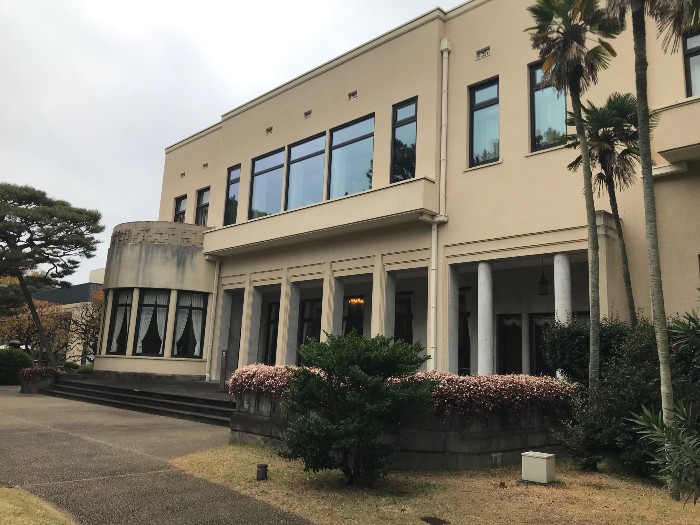
Prince Yasuhiko was the eighth son of Prince Kuni Asahiko and Tsunoda Sugako. Prince Kuni Asahiko was the youngest prince descended from the Fushimi-no-miya, one of the four branch houses of the imperial dynasty (shinnōke) entitled to provide a successor to the throne. The family was based in Kyoto.
In 1906, the Emperor Meiji authorized Prince Yasuhiko to begin a new branch of the imperial family as Asaka-no-miya. Prince Asaka married Nobuko, Princess Fumi, the eighth daughter of Emperor Meiji in 1909. Prince and Princess Asaka had four children.A career military man, he graduated from the Imperial Japanese Army Academy on 27 May 1908. After being commissioned a second lieutenant of infantry on 25 December, Prince Asaka was promoted to lieutenant in December 1910, captain in August 1913, major in July 1918, and lieutenant-colonel in August 1922.
In the early 1920's Prince Asaka studied military tactics at the École spéciale militaire de Saint-Cyr in France, along with his half-brother Prince Naruhiko Higashikuni and his cousin Prince Naruhisa Kitashirakawa. Unfortunately, in April of 1923 the prince was seriously injured in a car accident that killed Prince Kitashirakawa.
Princess Asaka traveled to France to help the prince in his recovery, and by 1925 they were on the road, traveling through Europe and the United States. During that period, Prince and Princess Asaka became thoroughly enchanted with the Art Deco movement that was particularly trendy in the United States.Upon returning to Japan that same year, the Prince and Princess began drawing up plans for a new mansion to be built in the Art Deco style in Tokyo's Shirokanedai neighborhood on land that they received from the Imperial Family at the time of their marriage. The mansion was completed in May of 1933. But it was a fleeting happiness that the royal couple enjoyed. A new months after its completion, the Princess Asaka died of complications due to kidney disease.
Meanwhile, Prince Asaka's military career accelerated, as he rose through the ranks practically every year. He eventually was made a member of the Supreme War Council, and from that position had direct access to the Emperor. In 1936 there were multiple political and military factions within the government that caused internal conflict. The Prince attempted to influence the Emperor to lean in favor of a particular faction, and that turned out to be a career mistake that may have pushed him out. Not long after this disagreement with the Emperor, Prince Asaka was transferred to the Japanese Central China Area Army in China.
It was in this position, under the aging General Iwane Matsui, that he made his legacy. The general was ailing in health so was transferred back to Japan, leaving the Prince the person in charge of the army. Under Matsui and then the Prince's leadership, many atrocities in China were perpetrated by the Japanese Army. These atrocities became known as the "Nanking Massacre."
After the war, the Allied Forces and the Japanese Government agreed to abolish all collateral branches of the Japanese Imperial family. So, the Prince was no longer a prince, and he and his children lost all the privileges to which they were previously entitled.
The Prince was never charged for these crimes, and lived a long life on the Izu Peninsula until he died in 1981.
His lovely art-deco home was subsequently seized by the Japanese Government, and served as the official residence of the Prime Minister for a few years. It then served as a State Guest House until 1974. In 1983, after some renovations, the residence was opened to the public as a museum.
In 2013-2014 the building underwent extensive renovations. A new museum annex was built adjacent to the main residence which today houses various collections of art and sculpture from the pre-war era. The annex also boasts a café and museum shop, too.
Please enjoy the pictures of the residence interior and annex!


位置
単語
フラッシュカードドリル-
Only authorized personnel can enter this building.この建物に入れるのは公認された職員だけです。
-
The company is not authorized to sell this product overseas.その会社はこの製品を海外で販売することを公認されていません。
-
They are collateral branches of the same royal family.彼らは同じ王室の傍系の一族です。
-
He is a collateral relative, not a direct heir to the title.彼はその称号の直系ではなく、傍系の親族です。
-
She is descended from a famous samurai family.彼女は有名な侍の家系の子孫である。
-
They claim to be descended from ancient kings.彼らは古代の王たちの子孫だと主張しています。
-
Slavery was abolished in the United States over 150 years ago, yet racism still exists.
-
The legacy of the Hatoyama family is significant in Japanese history.鳩山家の遺産は日本の歴史において重要です。
-
He left a legacy of innovation that continues to influence new generations.彼は新しい世代に影響を与え続ける革新の遺産を残した。
-
Citizens are entitled to vote at the age of 18.市民は18歳になると投票する権利が与えられます。
-
Employees are entitled to paid holidays each year.従業員は毎年有給休暇を取る権利が与えられています。
-
He chose a military career after graduating from university.彼は大学卒業後に軍事の道を選びました。
-
The country increased its military budget this year.その国は今年、軍事の予算を増やしました。
-
The museum built a new annex for temporary exhibitions.博物館は企画展示用の新しい別館を建てました。
-
Our office moved to the annex next to the main building.私たちのオフィスは本館の隣の別館に移しました。
-
The report described the atrocities committed during the civil war.その報告書は内戦中に行われた残虐行為を詳しく説明しました。
-
They demanded justice for the atrocities of the past.彼らは過去の残虐行為に対して正義を求めました。
-
The hotel will be closed for renovations until next spring.そのホテルは来春まで改装工事のため休業します。
-
After renovations, the old house looked brand new.改装工事の後、その古い家はまるで新築のように見えました。