
It was a nice weekday morning in Tokyo in early spring. Sunny, windy, suddenly cloudy, a typical spring day when my friend Lennart and I decided it was time to visit the last place on our government places to see list, The National Diet Building.
After a bit of walking around the enormous government building grounds, we found the entrance to the daily tours of the House of Representatives. The guards told us that the daily tour in English would start at 3pm, so we had some time to kill. Actually that time was well spent.
After perusing my Google Maps, I found the Parliamentary Museum not too far away. So off we went to check it out.
The Parliamentary Museum is dedicated to educating visitors about the government as it evolved from the Meiji Period to the Showa Period. There is a scale model of The National Diet Building, and some reproductions of its main chambers. There are a number of historical artifacts that provide authenticity to this small but very informative museum.
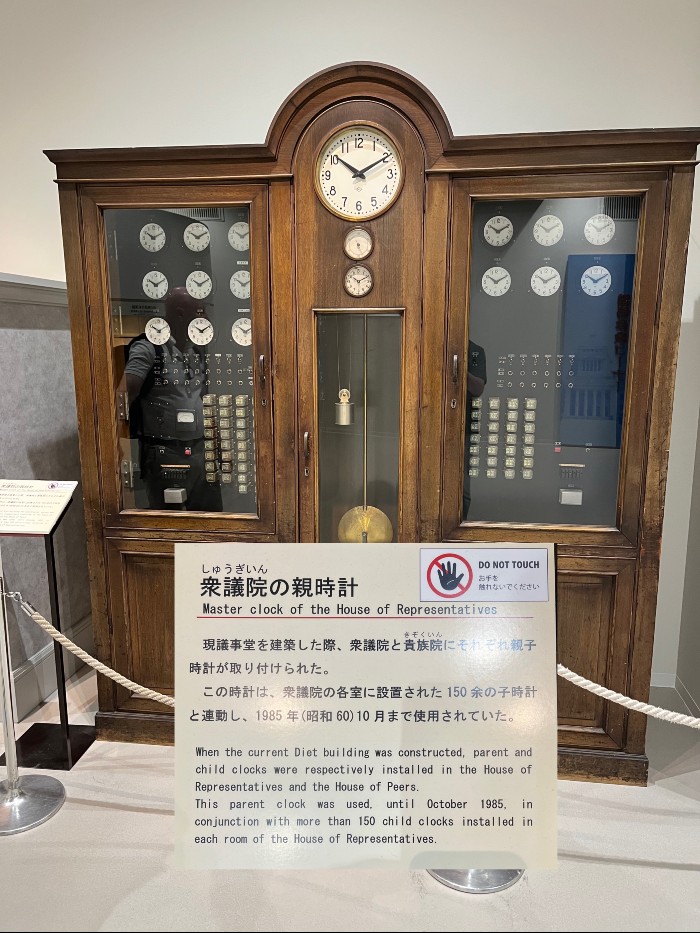
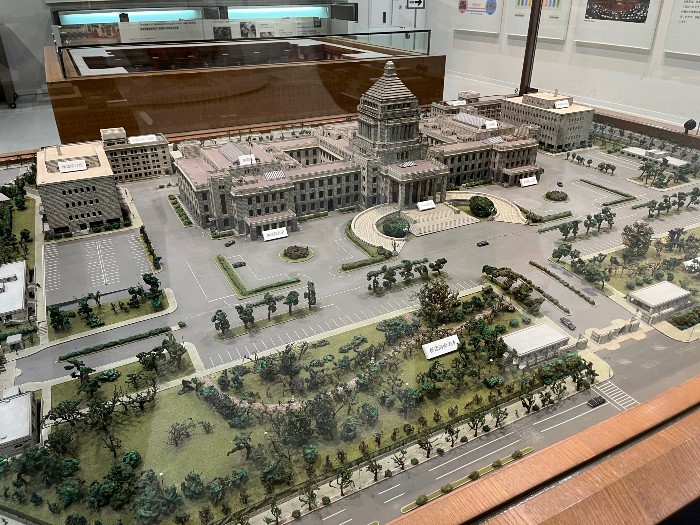
After that, we still had a few hours before the tour, so we started walking around the area and stumbled on the National Diet Library. I wanted to take a peek inside so we went in, and were greeted by an attendant before we even reached the reception desk. There she explained that we could enter the library on a temporary pass, which sounded like a great idea. So we applied for the temporary pass at the reception desk, and within 15 minutes we were issued a pink entrance card that would get us through the security gates. Not to go on too long about this, but we did find a place to eat lunch inside the library, and we even applied for permanent library cards.
Finally it was time for our tour, so we went back over to the Diet Building tour entrance. We got right in, and were seated with a number of mostly foreigners to wait until 3:00. The maximum number of people on the tour is 30, so we were just under that.
The tour itself is conducted by one of the guards, who spoke some English. He mostly read from prepared text, but he was available for questions. Another Japanese gentleman accompanied us on the tour, and his English was actually very good, so most people were asking him the more difficult questions.
We were led into a number of areas of the building, but the highlight was the Chamber of the House of Representatives. We were told that the House members had met earlier in this very chamber. Some of the key points of interest were marked with signs in both languages. We were guided to take pictures and even sit in the grandstand where the visitors and press sit. Quite impressive!
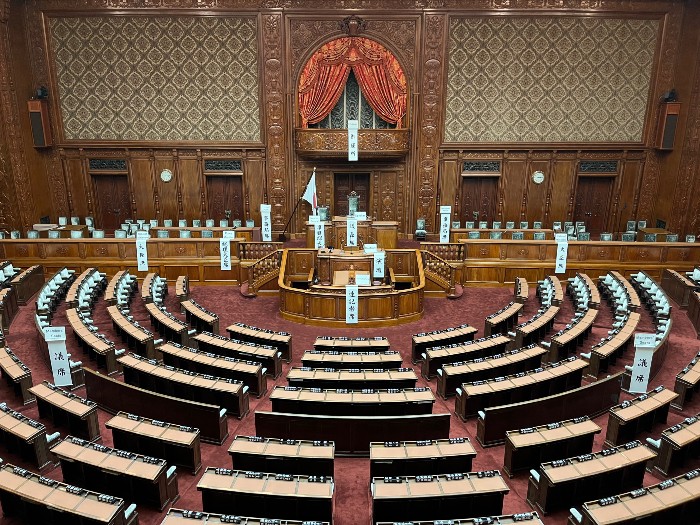
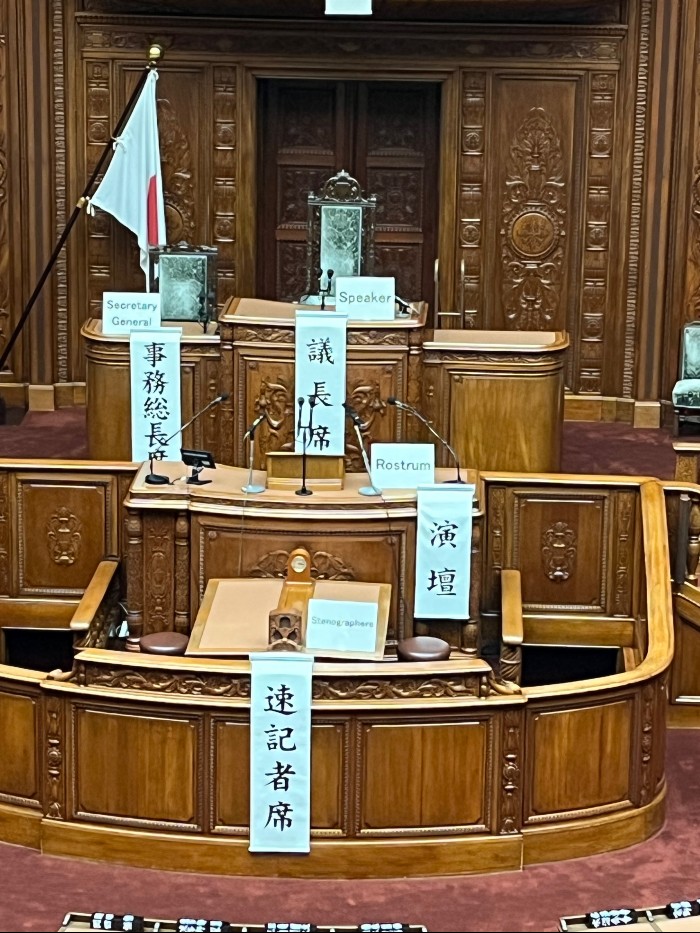
Other areas of interest were the entrances to the building, as well as some of the ornate facades on the walls of some of the chambers. We were shown some rooms where the Imperial Family could use but we were told that the Imperial Family had in fact never used those rooms, so I thought that was a waste and said as much to the guide. He shrugged and moved on to the next point of interest.
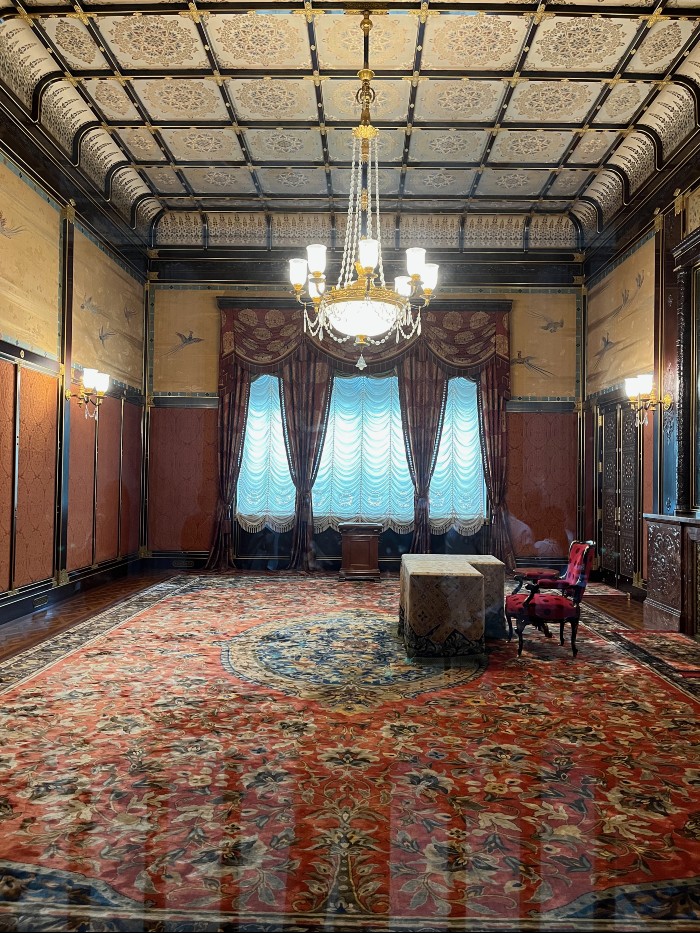
The history behind the creation of the current iteration of the National Diet Building is interesting, as it spanned the decades when Japan was entering a period of internationalization. The government realized that with the new capital renamed from Edo to Tokyo, there needed to be an opening of sorts to both foreign governments and businesses. To reflect the impression that Japan had embraced modern architecture, two foreign architect groups submitted proposals for the building's design.
The first provisional Diet building was built in late 1890, and hosted the first Diet meeting there. There were two prominent proposals for the design of this important building. One proposal was from a young British architect named Josiah Conder. He provided a design for the National Diet Building and many other buildings that would comprise the center of Japan's government.
The other major proposal was from an Ende and Böckmann, two German architects that were involved in the design of the German Reichstag buildings. Ende and Böckmann won the contract, but the Japanese government canceled it due to budgetary and time constraints. Instead, a group of architectural engineers in the ministry of home affairs handled the construction, and it was completed on time in November of 1890.
Almost two months after it was constructed, it burned down in a fire. The second provisional building was quickly built after that, finished in October of 1891.
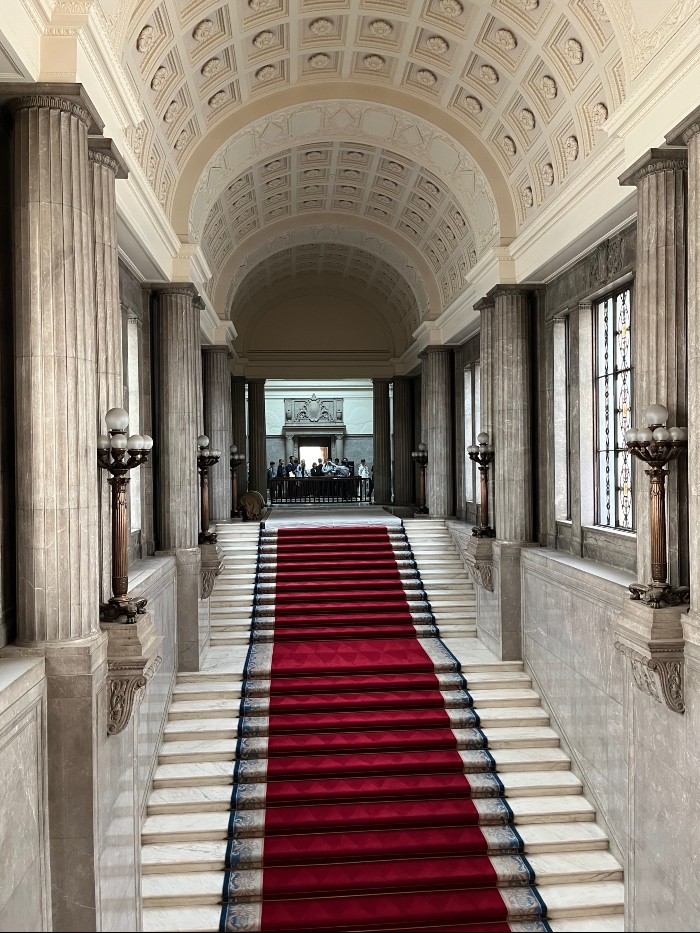
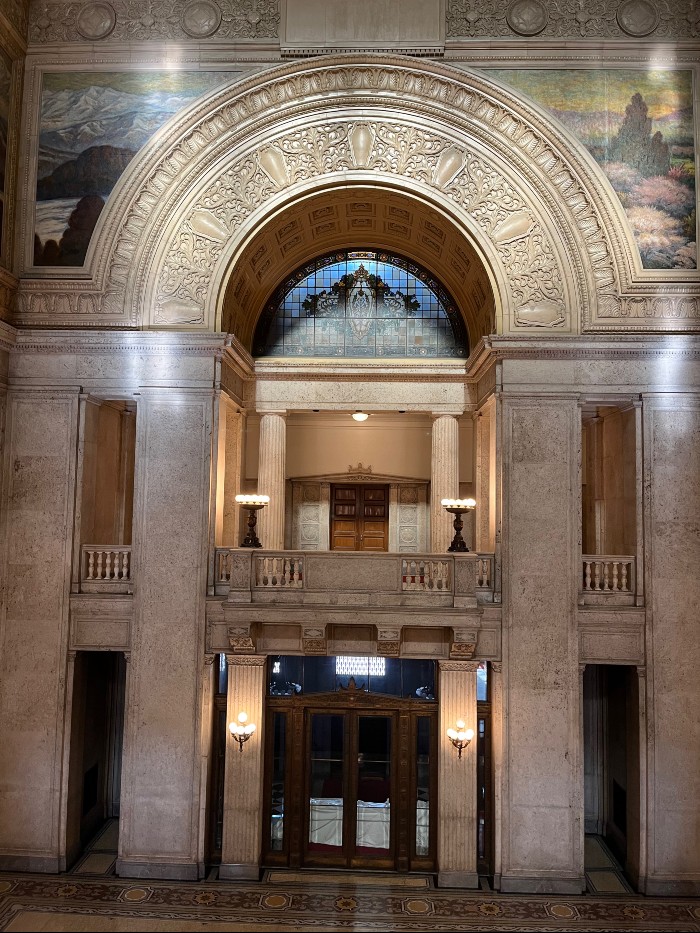
While the construction of the third building was going on, a design competition was held to design what would be the permanent National Diet Building. Fukuzo Watanabe's design was chosen from all the proposals submitted by the leading architects of the time. Construction was delayed on the permanent Diet building because the provisional building had to be completed first, as the government was waiting to resume business there. It took seventeen years to build the new Diet building, completed in November of 1936.
I think the interesting part of the design is the upper house chamber. Most people think that Japan's government is in the style of the British Parliament, and so to an outsider there may have been an expectation that the upper chamber would resemble the upper house chamber of the British Parliament at Westminster. But instead, the design resembles that of the original Ende and Böckmann design proposal. Interesting indeed.
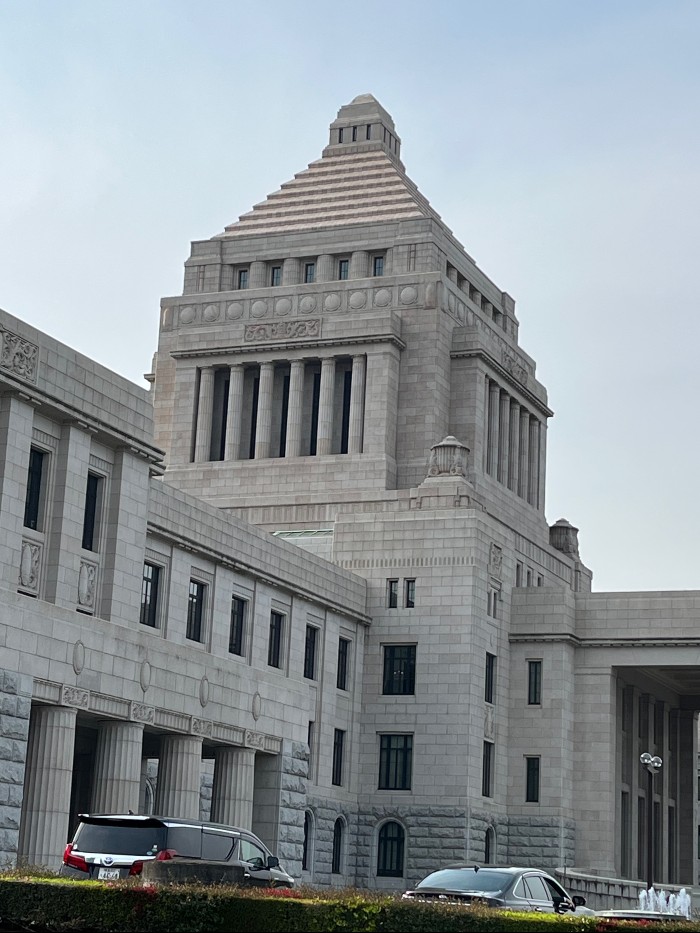
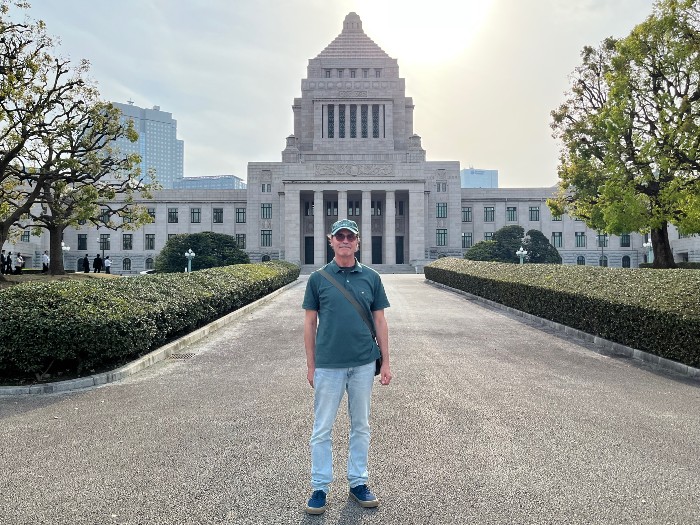
OK, about the tour.... It is great that you can take as many pictures as you like. The tour guides were very gracious and patient with us, and to them we are grateful. I hope you have as good a time touring this grand structure and learn a bit about how the Japanese government conducts its business.
位置
単語
フラッシュカードドリル-
They applied for a permanent library card.彼らは図書館の本館利用のためのカードを申請しました。
-
The city plans to build a permanent exhibition hall.市は恒久的な展示のための本館を建設する予定です。
-
The current iteration of the building is the result of many redesigns.現在の国会議事堂は、何度も設計変更が行われた結果の姿です。
-
Each iteration of the design brought new ideas.設計の各バージョンごとに、新しいアイデアが取り入れられました。
-
The museum displayed ancient artifacts from Egypt.博物館はエジプトの古代人工物を展示しました。
-
Archaeologists discovered artifacts that date back thousands of years.考古学者たちは数千年前の人工物を発見しました。
-
Japan was entering a period of internationalization.日本は国際化の時代に入りつつありました。
-
Internationalization changed the way the government dealt with foreign businesses.国際化は、政府が外国企業と接する方法を変えました。
-
Two foreign architect groups submitted proposals for the building’s design.2つの外国人建築グループが建物の設計について提案を提出しました。
-
Her proposal was chosen from many excellent ideas.彼女の提案は、多くの優れたアイデアの中から選ばれました。
-
The facade of the building is beautifully crafted.その建物の外観は美し装飾されています。
-
The historic facade attracts many tourists.その歴史的な外観は多くの観光客を引き寄せます。
-
The contract was canceled due to budgetary and time constraints.予算と期間の制約により、契約はキャンセルされました。
-
We had to design the building within strict space constraints.私たちは厳しいスペースの制約の中で建物を設計しなければなりませんでした。
-
The highlight of the tour was the Chamber of the House of Representatives.ツアーのハイライトは衆議院本会議場でした。
-
The upper house chamber is different from the one in the British Parliament.参議院議場は、イギリス議会の上院議場とは異なります。
-
I like to peruse a map before visiting a new city.私は新しんしい町を訪れる前まえに地図を調べるのが好すきです。
-
She perused the documents before signing the contract.彼女かのじょは契約書に署名する前まえに書類を調べました。
-
The coronavirus lockdown is only temporary. It should be all done by next spring.コロナウイルスの封鎖は一時的なものです。それはすべて来年の春までには終わっているでしょう。
-
An attendant greeted us at the entrance to the library.図書館の入いり口で係員が私わたしたちに挨拶してくれました。
-
If you have any questions, please ask the nearest attendant.質問しつもんがあれば、近ちかくの係員にお尋ねください。
-
We sat in the grandstand to watch the ceremony.私わたしたちは式典を見るために観覧席に座りました。
-
The grandstand was full of visitors and press.観覧席は来場者らいじょうしゃと報道関係者でいっぱいでした。
-
The ornate ceiling attracted everyone's attention.華麗な天井は皆みなの注目を集めました。
-
They walked through an ornate hall decorated with gold and marble.彼かれらは金と大理石で飾られた華麗なホールを通り抜けました。
-
The detailed models give the exhibition a strong sense of authenticity.精巧な模型が展示に強い臨場感を与えている。
-
The sound effects add authenticity to the historical film.音響効果がその歴史映画に臨場感を添えている。
-
The museum has a reproduction of the original chamber.博物館には元の議場の複製がある。
-
This is a high-quality reproduction of a famous painting.これは有名な絵画の高品質な複製だ。
-
The imperial palace is a popular tourist attraction.帝国の宮殿は人気の観光名所です。
-
He studied imperial history in school.彼は学校で帝国の歴史を勉強しました。
-
The government met in a provisional building after the fire.火事の後、政府は仮議事堂で会合を開いた。
-
They used a provisional hall while the main building was under construction.本館が建設中の間、かれらは仮議事堂を使用していた。
-
The government canceled the contract because of budget problems.政府は予算の問題で契約をキャンセルしました。
-
Our tour was canceled due to a sudden storm.私わたしたちのツアーは突然とつぜんの嵐のためキャンセルされました。