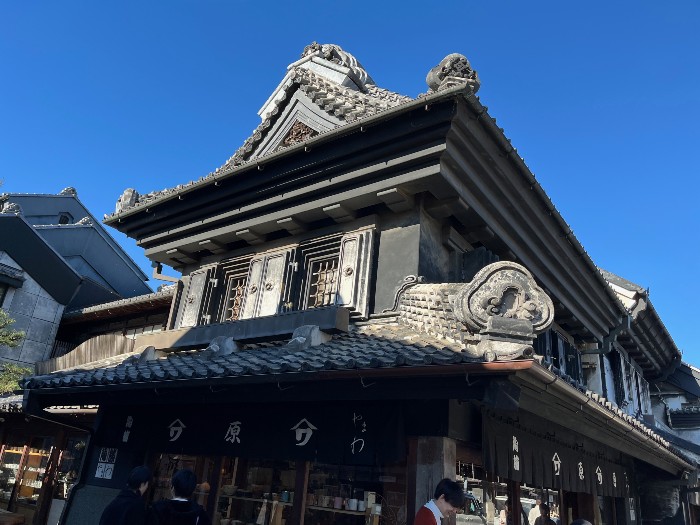
I had not heard of Kawagoe until our friends P-san and Naomi offered to take us there for lunch. So we met them in Omiya, and they drove to Kawagoe in their newish white Audi.
An Edo-era town in Saitama northwest of Tokyo, Kawagoe was historically a warehouse town, with its heart in its warehouse district called Kurazukuri. The main street in Kurazukuri is lined by Edo style buildings, some of which have been standing for centuries. There you'll find snack and candy shops, and traditional restaurants. See my story on a couple of restaurants I tried by clicking here.
The main sights in Kawagoe, in addition to the Kurazukuri district, are the historic temples and the remains of Kawagoe Castle.
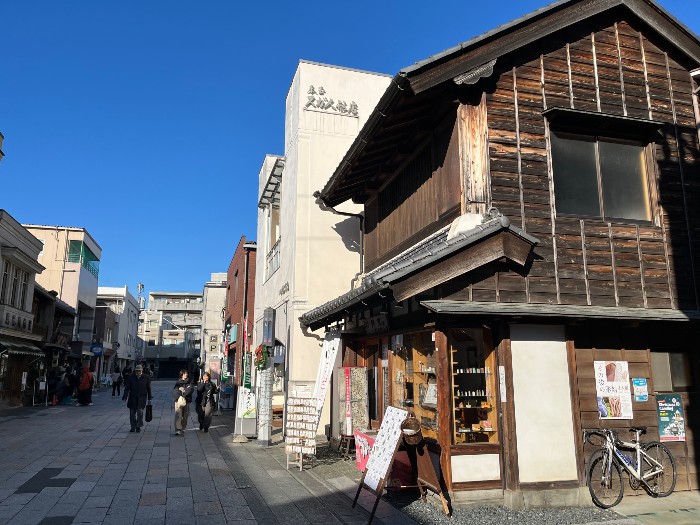
Kurazukuri Street is a two lane road where many of those old storefronts can be found. I found that on a weekend day it can get pretty crowded on the limited sidewalk area, while you still have quite a bit of car and bus traffic to dodge. There are two other popular roads - Kanetsuki Street and Taisho Roman Dori - where you can walk safely and enjoy the shops without having to keep an eye out for motorized vehicles (for the most part).

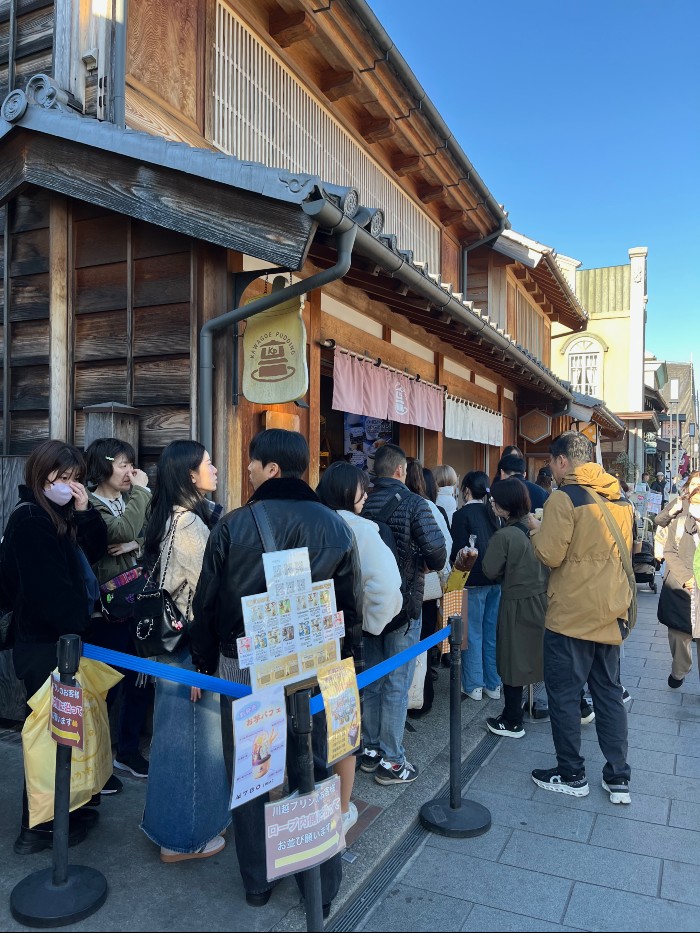
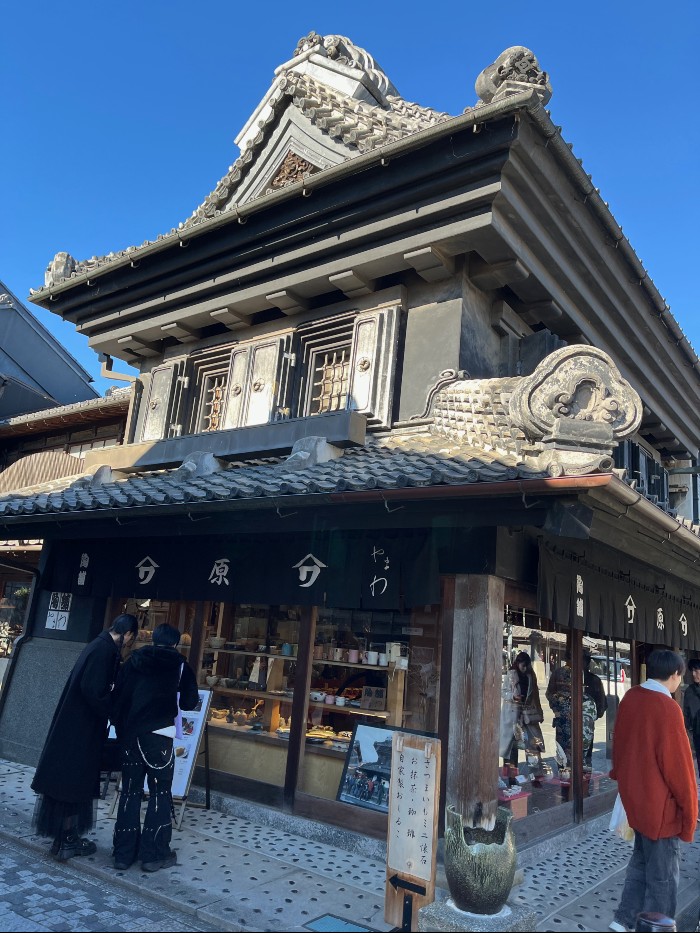
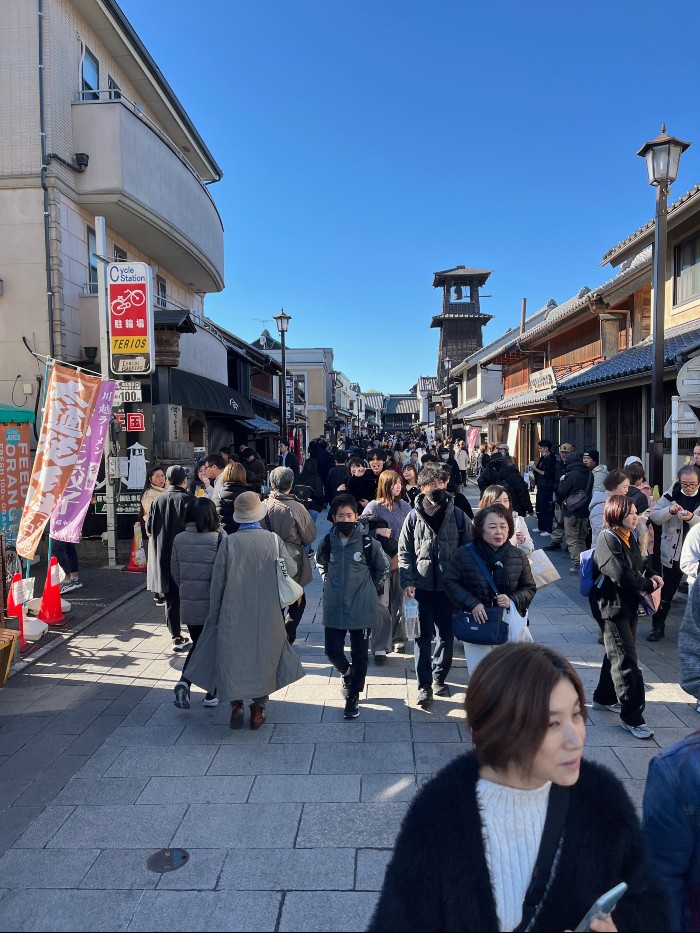
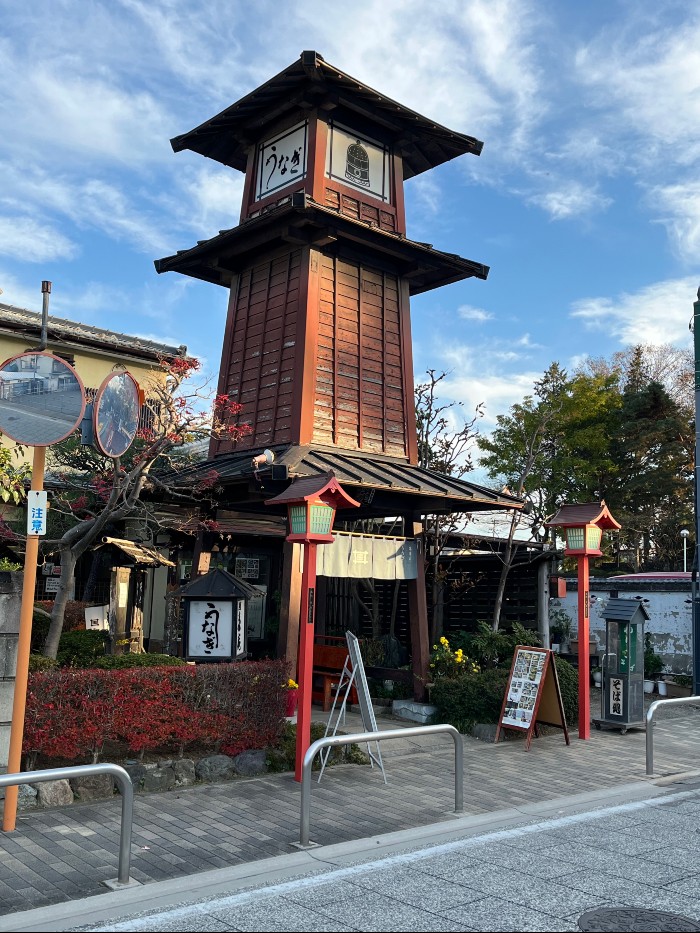
Kanetsuki Street is most famous for their old clock tower known as Toki no Kane. It was originally constructed in the early 1600s and was reconstructed multiple times after it was destroyed by fire. The tower is tall enough to be seen by the surrounding neighborhoods.
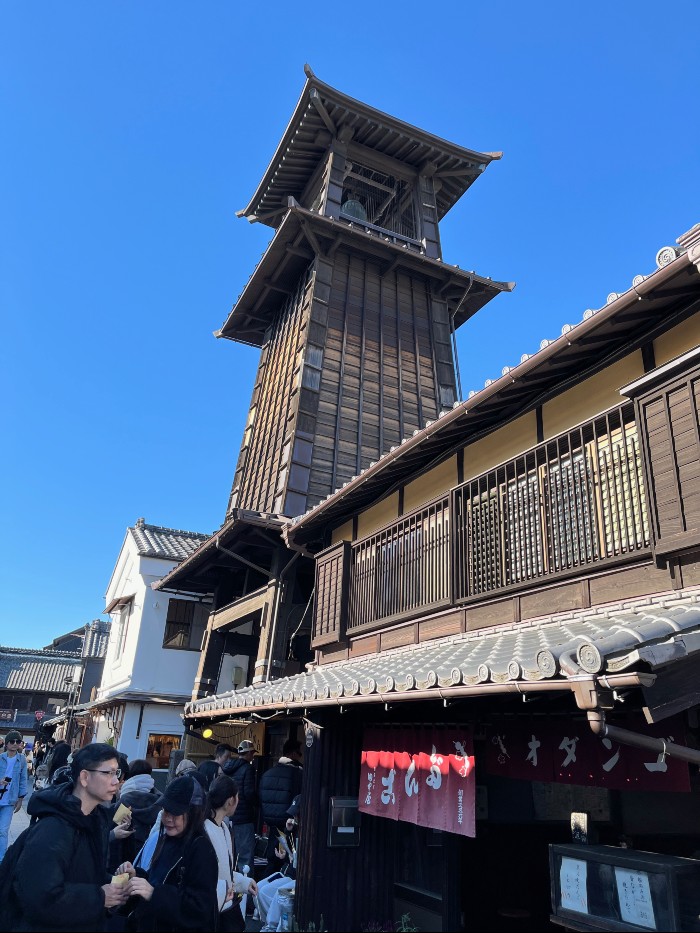
You'll also notice a Starbucks in an old traditional building, reminiscent of the one in Kiyomizu, Kyoto. We didn't go inside but I'm sure the menu is traditional Starbucks, and so your usual frappuccino is waiting for you.

On Taisho Roman Dori you'll see traditional storefronts designed during the Taisho period (1912-1926). These in addition to the ones designed before that in the Edo period (1615-1868), as well as some designed after that in the Showa period (1926-1989), all stand side by side like old friends. Many of the buildings are the original structures, with wood frames and facades dating back more than a century. For elderly Japanese folks, these streets must invoke a deep nostalgia and longing for the past.
This concluded our day together in Kanagoe, but alas, I came home thinking that there was more to see. So I returned alone the following day, which was a Monday. What a difference a day makes! Many of the shops were closed, and the level of tourist activity was a small fraction of what it was on Sunday. A perfect day to visit the temples, because they are always open!
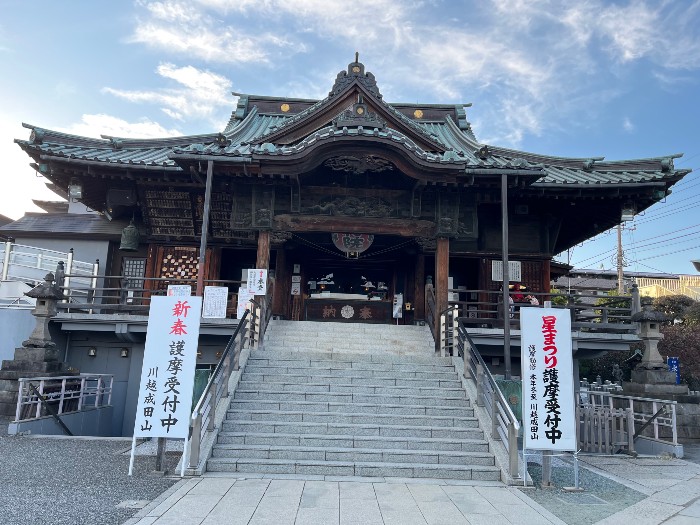
There are numerous temples in Kawagoe that are worth visiting, but I will only mention a couple of them. The route I took to view them started after my burger lunch at Burger Cafe Honohono. I walked south through the Otemachi district, and into the Sankubocho district, and headed towards the temple complex centered around Kita-in. After a left turn off the main road going east, the first temple I encountered was Naritasan Kawagoe Betsuin Hongyo-in.
Naritasan Kawagoe Betsuin Hongyo-in is an Edo-era temple founded in 1853 by Ishikawa Sho'on. The background of the temple's establishment is interesting. Ishikawa at one point in his life became blind, and so he began fasting at Naritasan Shinshoji Temple in Narita, Chiba. This temple is dedicated to the fire god Fudō Myō-ō, also known as Acala outside Japan. Eventually Ishikawa regained his eyesight, and attributed his recovery to Fudō Myō-ō. He decided to spread the word about Fudō Myō-ō throughout the country, and eventually settled into re-constituting an existing temple into the current Kawagoe Betsuin temple, dedicated to Fudō Myō-ō.
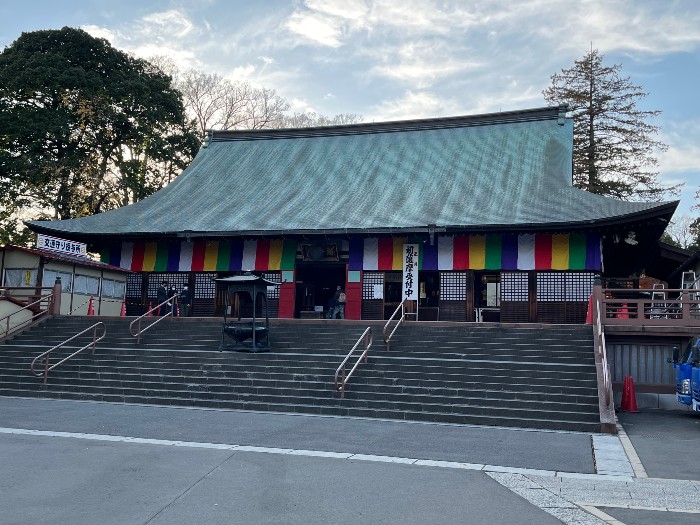
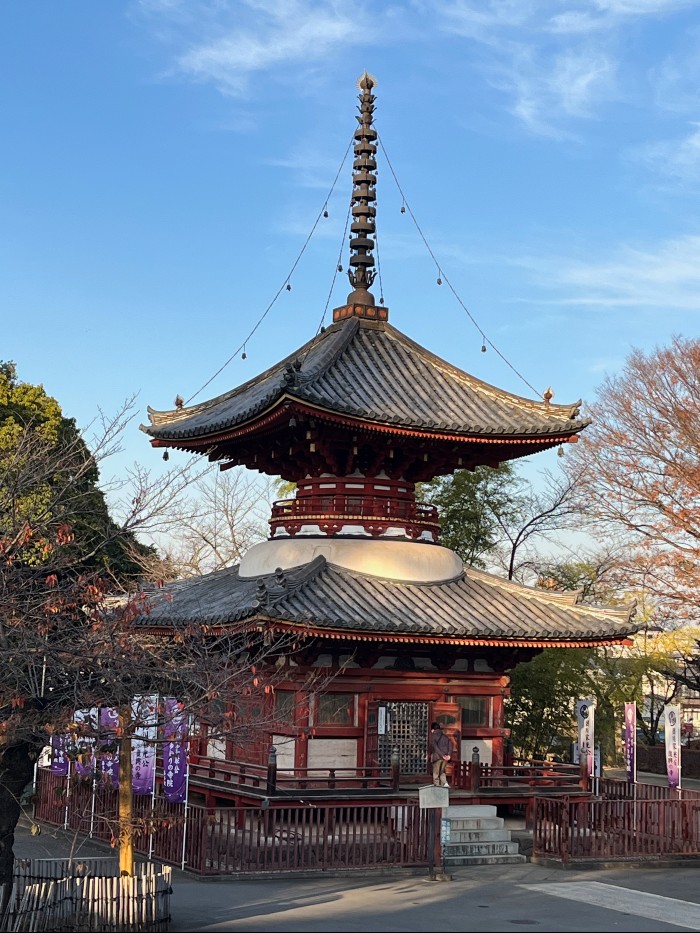
I then proceeded south to the main temple group of Kita-in, which is the head temple of the Tendai Sect in the Kanto Region. Kita-in was one of three temples built as a group in the 7th century. It came into prominence in the 17th century due to shogun influence in the Edo period. Much of Kita-in was destroyed by fire in 1638, and during reconstruction, some buildings from Edo Castle (the Imperial Palace grounds in Tokyo) were transported to this site. These are the only buildings that remain from Edo Castle.

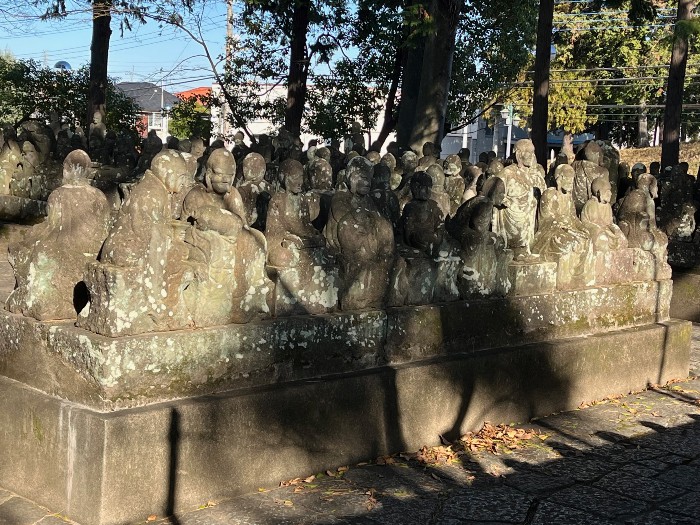
One other interesting site to check out is the Gohyaku Rakan statues, which consist of 540 stone statues of the disciples of Buddha, each with its own facial expression.
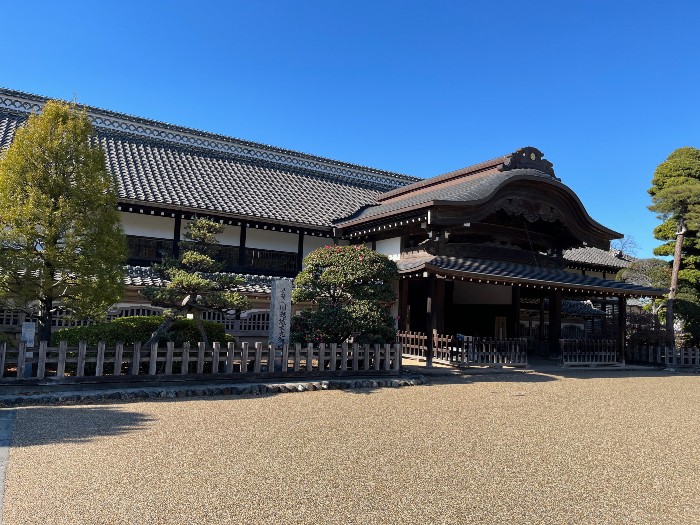
Two places that I did not check out fully are the remains of Kawagoe Castle, and Honmaru Palace. There are some scattered remains of the boundaries of the castle, which incidentally gave us a notion of how large the castle grounds were.
Kawagoe Castle was built in 1457 by Ogigayatsu Uesugi Mochitomo, a powerful military leader and shugo daimyō of the powerful Ōgigayatsu branch of the Uesugi clan during Japan's mid-Muromachi period. Matsudaira Nobutsuna, lord of Kawagoe Domain, led a major renovation and expansion of Kawagoe Castle in 1638, which included the Honmaru. Honmaru Palace is the only remaining structure of Kawagoe Castle still standing.
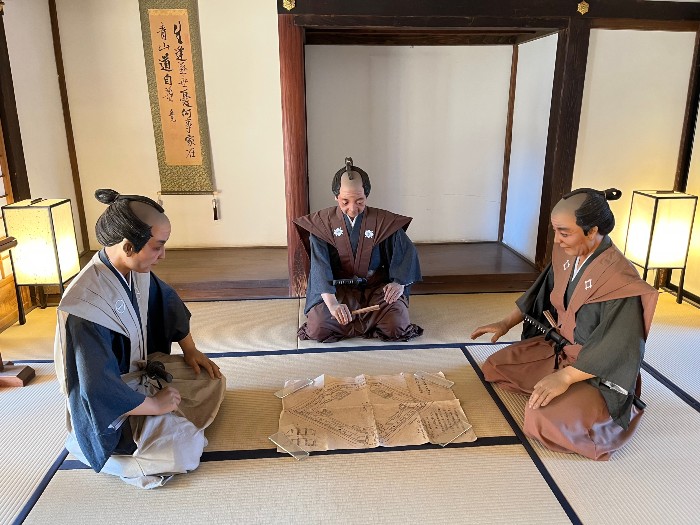

I can't help thinking that I just scratched the surface on the history of Kawagoe, in particular its ancient temples and castle. I promise to return and learn more. Maybe I'll see you there too?