
Byodoin is an ancient Heian period temple complex in Uji built in 998. It was originally a villa constructed for Minamoto no Shigenobu, who was a son of Emperor Uda. In the period of Japanese history starting after 814, the surname Minamoto was bestowed on members of the imperial family who were excluded from the line of succession.
After Shigenobu died, Fujiwara no Michinaga purchased the property. The Fujiwara clan was powerful during this period, and the famous book The Tale of Genji is partially based on the life of Michinaga.
The villa was made into a Buddhist temple by Michinaga's son Fujiwara no Yorimichi in 1052, a Regent to the emperor. A Regent is a person appointed to govern on behalf of the emperor temporarily because the emperor is a minor or incapacitated.
In the following year, Amidado, or Phoenix Hall as it is referred to in English, was completed. The statue inside Phoenix Hall is of Amida Buddha, and was created by Jōchō, who is known as one of the best sculptors of Buddhist artifacts during the Heian Period.
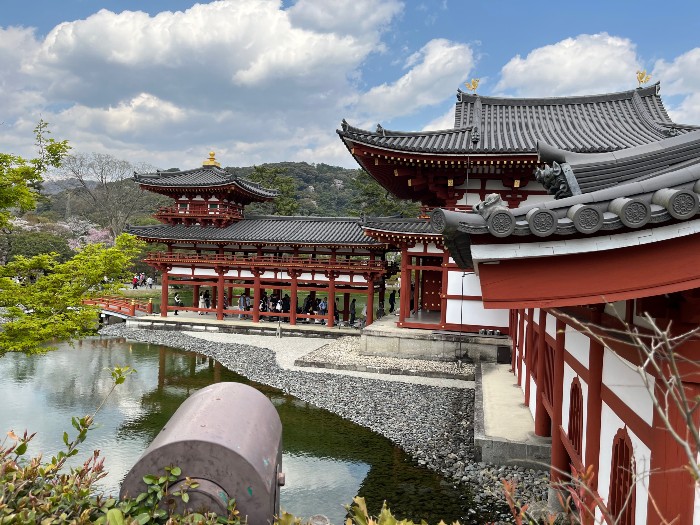
Byodoin gradually expanded over the subsequent years with the addition of multiple structures. A wartime fire in 1336 destroyed many of those buildings, but fortunately left Phoenix Hall intact.
There were multiple efforts to renovate Byodoin, the first notable one in 1496. A new temple, Jodoin, was opened as an adjunct temple due to the renovation of Byodoin. Jodoin is operated by the Jōdo-shū (Pure Land) school of Buddhism and dedicated to the Amida Buddha. Saisho-in, another notable temple at Byodoin, was established in 1654 by the Tendai-shū (Heavenly Level) sect of Buddhism.
Today, both of these sects jointly manage the Byodoin temple complex, which now includes a museum and tea garden.
Byodoin was designated as a UNESCO World Heritage Site in 1994.
To be honest, we pretty much ignored both Jodoin and Saisho-in, and focused on Phoenix Hall and the museum. And of course the surrounding grounds are really well-appointed with cherry trees, making for some nice pictures with Phoenix Hall, surrounded by a pond, in the background.
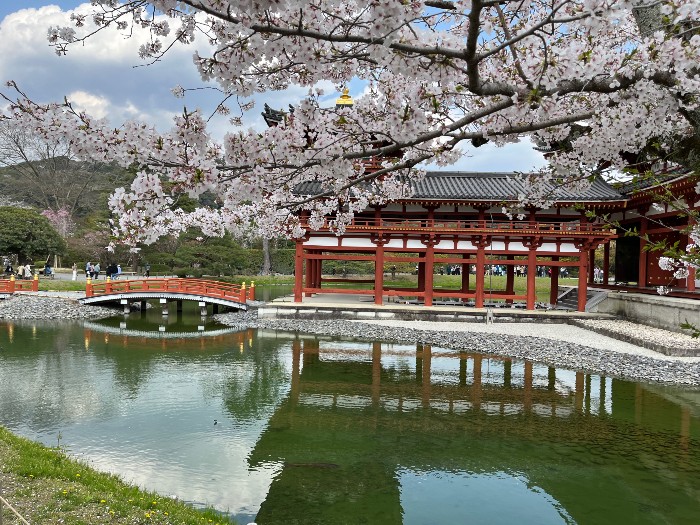
Entry into Phoenix Hall costs a few hundred yen. You are given a time slot to enter, and so you enter in a group. You'll walk across the red bridge into the main hall, and then a docent will provide a description of the hall's contents and history - in Japanese only.
The museum is an additional charge to enter, but is well worth it. Numerous artifacts are on display inside, most notably a couple of phoenix and Buddha statues.
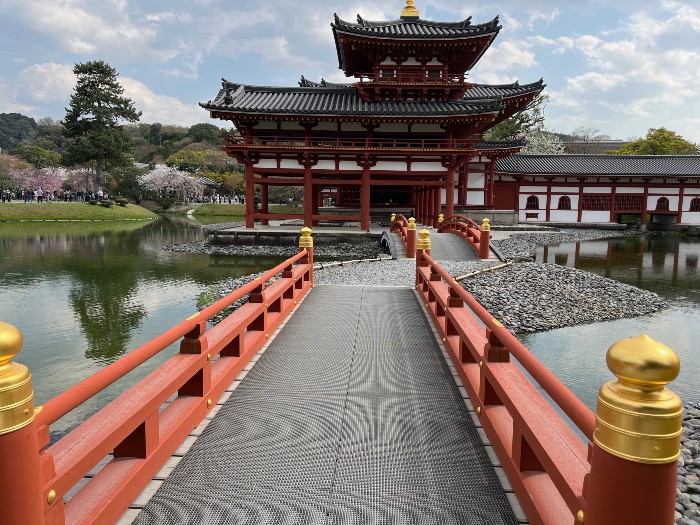
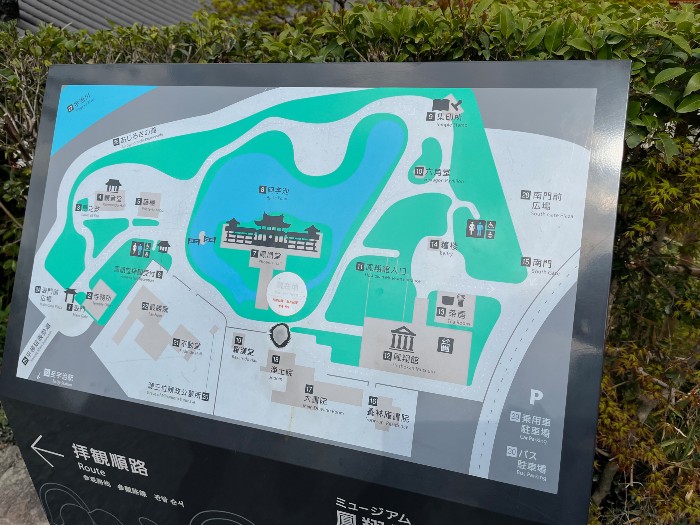
Getting to Byodoin is not really that difficult, though definitely out of the way. If you can get yourself to Uji station on the Uji line, you have a ten minute walk to get to the entrance, which is not too bad. So, if you've seen the main temples and shrines in the center of Kyoto, consider Byodoin as your next-level Kyoto destination!
位置
単語
フラッシュカードドリル-
The docent provided us with detailed information about the history of the palace.案内人は私たちに宮殿の歴史について詳しい情報を提供してくれました。
-
She asked the docent many questions about the artwork in the gallery.彼女はギャラリーのアート作品について案内人に多くの質問をしました。
-
The temple complex is famous for its old buildings.その寺院群は古い建物で有名です。
-
Visitors walked through the temple complex in the morning.訪問者は朝にその寺院群を歩きました。
-
The emperor had a villa by the river.天皇は川のそばに別荘を持っていました。
-
The villa was later turned into a temple.別荘はその後寺に変えられました。
-
The museum displayed ancient artifacts from Egypt.博物館はエジプトの古代人工物を展示しました。
-
Archaeologists discovered artifacts that date back thousands of years.考古学者たちは数千年前の人工物を発見しました。
-
The regent ruled for the young emperor.摂政は若い天皇のために政務を行いました。
-
A regent often had great political power.摂政はしばしば大きな政治力を持っていました。
-
They plan to renovate the old hall.彼らは古い堂を改修する予定です。
-
The city will renovate the museum next year.市は来年その博物館を改修します。
-
The entrance is about ten minutes from the station.入口は駅から徒歩で十分ほどです。
-
Please wait at the entrance before the tour starts.見学が始まる前に入口で待ってください。
-
The site was designated as a World Heritage site.その場所は世界遺産として登録されました。
-
The temple was designated in 1994.その寺は1994年に登録されました。
-
One of the important religious sects protesting the new laws today is an offshoot of the Catholic Church.
クイズ
このレッスンはいかがでしたか?
ご質問やご感想をお気軽にどうぞ。すべて目を通しています。